How to calculate a truck load capacity step by step
Knowing how to calculate a truck load capacity is one of the foundations of an efficient logistics operation. It is not enough to know the size of the unit or estimate how much physically “fits” in the box. Real load capacity depends on permitted weight, vehicle configuration, and regulatory restrictions that apply on each route or jurisdiction.
- May 19, 2026
- Updated: May 26, 2026
- Leandro Mataloni
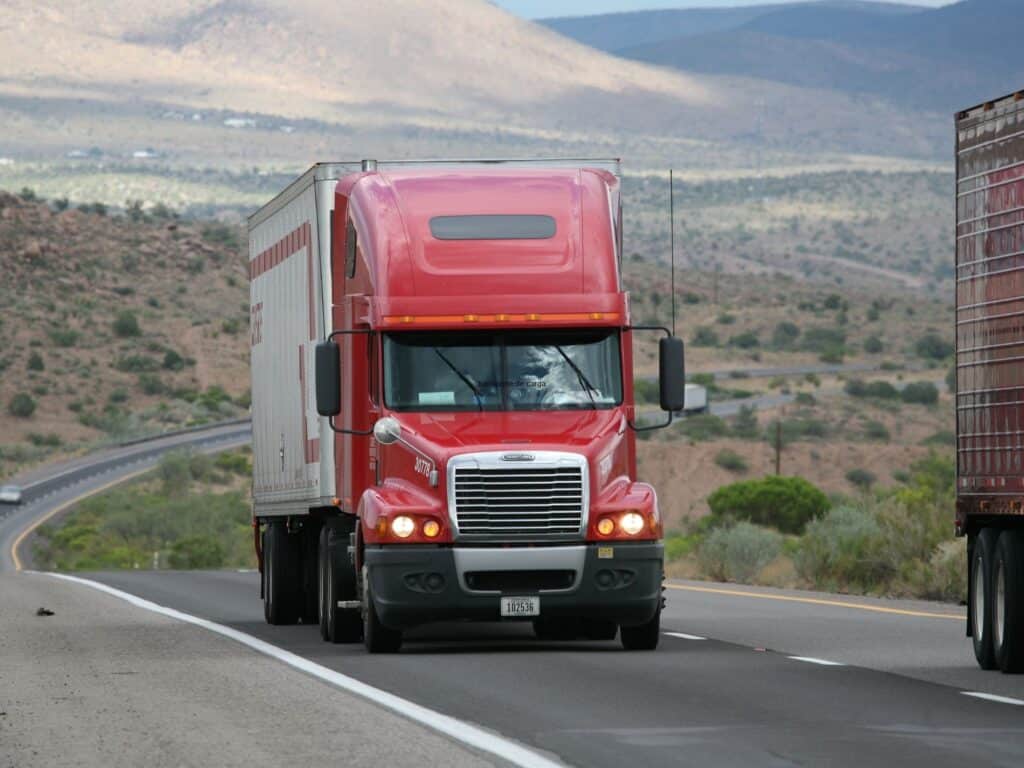
When this calculation is done poorly, the company exposes itself to several problems at the same time: overweight, greater component wear, more fuel consumption, fines, immobilizations, and even safety risks. Conversely, when calculated correctly, it’s possible to better assign each unit, optimize useful load per trip, and protect operations.
This article is a practical step-by-step guide. If you’re looking for reference values by vehicle type already calculated (rabón, torton, trailer), you’ll find them in how many tons does a rabón, torton, or trailer carry. Here you’ll see how to do the calculation yourself for any unit, step by step.
What is a truck’s load capacity
Load capacity is the maximum weight a unit can transport safely and legally. It’s not just about how much space the truck has, but how much weight it can move without exceeding its technical or regulatory limit.
To understand the calculation, three concepts must be separated:
- Tare: the weight of the empty vehicle.
- GVW: total permitted weight in operation.
- Useful load: the weight available for merchandise.
This last value is what really matters when planning trips, assigning loads, and avoiding overweight. To deepen the legal framework around this topic, check the comprehensive weights and dimensions guide for cargo transport.
The base formula
The formula to calculate a truck’s load capacity is simple:
Useful load capacity = GVW − Tare
What GVW means
GVW or Gross Vehicle Weight is the maximum total permitted weight for the unit in operation. It includes:
- The weight of the empty truck (tare).
- The transported cargo.
- The fuel.
- The driver and other onboard items.
What tare means
Tare is the weight of the empty vehicle, without cargo. It can vary depending on box or trailer type, installed accessories, axle configuration, and additional equipment.
Simple example
If a torton has a GVW of 22 tons and a tare of 8 tons:
22 t − 8 t = 14 tons of useful capacity
That result indicates how much it can carry under reference conditions, before considering additional restrictions by axle, route, or local regulations.
Step by step: how to calculate load capacity
To apply the calculation properly, it’s worth always following the same 4-step process.
Step 1. Verify the vehicle’s GVW
The first step is identifying the authorized GVW. That data is usually in:
- Vehicle technical sheet.
- Vehicle registration or ID document.
- Manufacturer’s homologation.
- Legal documentation of the unit.
Don’t assume GVW “by memory” or by comparison with another vehicle of the same model: two seemingly identical units can have different GVW depending on configuration or modifications.
Step 2. Identify real tare
The second step is knowing the real weight of the empty vehicle. This data can change from the manufacturer’s specification if there was:
- Box or body change.
- Installation of additional equipment (crane, tank, platform).
- Chassis modifications.
- Incorporation of considerable-weight accessories.
Ideally, validate tare on a real scale, not just with manual data.
Step 3. Subtract GVW minus tare
Once you have both verified data:
Useful capacity = GVW − Tare
This is the theoretical capacity value. One more step is still missing.
Step 4. Validate additional restrictions
Although the calculation gives a correct theoretical value, you must review:
- Permitted axle weight according to local regulations.
- Authorized route type.
- Country or corridor regulations.
- Trailer configuration.
- Type of transported cargo.
This point is key: a unit may be within total GVW and still be out of compliance due to poor weight distribution between axles.
Factors that influence real capacity
The base formula helps a lot but doesn’t exhaust the problem. Five variables modify real operational capacity.
Number of axles
The more axles a configuration has, the better weight can be distributed. This influences both legal capacity and vehicle wear. In many regulations, the limit is not defined only by total weight, but also by the weight supported by each axle or set of axles.
Box or trailer type
A platform doesn’t weigh the same as a dry box, a refrigerated one, or a tank. Tare changes, and so does available useful capacity. Two vehicles with the same GVW can transport different amounts depending on the body or trailer used. To deepen this point, review trailer box sizes and compatibility.
Suspension and chassis
The truck’s mechanical configuration affects stability, behavior under load, and safe weight distribution. Units with pneumatic suspension usually have better distribution than those with mechanical suspension.
Tire condition and pressure
Sometimes underestimated, but this point directly influences safety, wear, and vehicle behavior under load. Proper tire management is part of real operational calculation.
Local regulations
Legal capacity can change depending on country, route, number of axles, or distance between them. A vehicle with authorized GVW for a main corridor may have restrictions on secondary routes or urban zones.
Practical example: step-by-step calculation
Let’s see a real case. A company needs to calculate the capacity of a single trailer before assigning a 400 km grain trip.
Step 1: GVW
They verify the vehicle’s registration → Authorized GVW: 45 tons
Step 2: Tare
They weigh the empty vehicle on a scale → Tare: 13 tons
Step 3: Subtraction
45 t − 13 t = 32 tons of theoretical useful load
Step 4: Validation
They review:
- Corridor’s legal axle weight → allows 32 t well distributed ✓
- Type of cargo (bulk grains) → valid for platform or hopper ✓
- Trailer configuration → adequate hopper ✓
- Country regulations for that corridor → no special restrictions ✓
Result: the unit can transport up to 32 tons of grains, as long as distribution between axles respects legal limits.
📥 Free download: Fleet management guide — 5 main fleet management challenges. Get the ebook →
What happens if the load is within total weight but poorly distributed
This is one of the most common errors when applying the formula. Many believe they’ve understood the calculation just because they subtracted GVW minus tare. But a critical variable remains: weight distribution.
A unit may comply with total permitted weight and still exceed the axle limit. When that happens, the operation remains in violation and the vehicle may present:
- Worse stability.
- Greater localized wear on the overloaded axle.
- Greater risk of penalty at public scale.
- Unsafe behavior on the road, especially in curves and braking.
The correct calculation doesn’t end with the subtraction. It also requires reviewing how the load is distributed among axles. To understand this point in depth, check the guide on axle weight on cargo trucks: legal limits and fines.
Common errors when calculating load capacity
- Using estimated tare from the manual and not the real one measured on a scale.
- Confusing GVW with useful load.
- Not considering the weight of the box or trailer actually installed.
- Ignoring the weight of fuel, pallets, or other onboard items.
- Not reviewing axle weight after the general calculation.
- Applying a general regulation to all routes and countries where the fleet operates.
- Calculating once and not validating again after vehicle modifications.
Avoiding these errors improves both compliance and operational efficiency.
How to digitize the calculation in a fleet
In fleets with many units, calculating load capacity each time a trip is assigned becomes manually unfeasible. The solution is to centralize technical data per unit in the management system.
VEC Fleet allows registering per vehicle:
- Authorized GVW and real tare.
- Calculated legal useful load.
- Axle configuration.
- Type of box installed.
- Associated documentation and authorizations.
- Known restrictions by route.
With this centralized information and the operational dashboards, the decision of how much to load on each trip stops depending on the dispatcher’s criteria and becomes an automatic validation against verified data.
Conclusion
Understanding how to calculate a truck’s load capacity is essential for any company operating with cargo vehicles. The base formula is simple: subtract tare from permitted gross vehicle weight. But professional management must also consider axles, box type, weight distribution, and local regulations.
When the company masters this calculation, it can better assign each unit, avoid overweight, reduce wear, and operate more safely. And when that information is centralized on a platform like VEC Fleet, management gains more traceability, more control, and better decision-making capacity.
Want to manage your trucks’ load capacity with more control and fewer operational errors?
With VEC Fleet you can centralize technical information, maintenance, documentation, and indicators per unit from a single platform.
Frequently asked questions
How is a truck’s load capacity calculated?
The base formula is useful capacity = GVW − tare. First verify the Authorized Gross Vehicle Weight in the vehicle’s technical sheet, then weigh the real tare of the empty truck on a scale, subtract both values, and finally validate additional restrictions by axle, route, and local regulations.
What is a truck’s tare?
It’s the weight of the empty vehicle, without cargo. It varies depending on the box, trailer, installed accessories, and unit configuration. The ideal is to validate tare on a real scale and not assume the manufacturer’s manual value.
What is GVW?
It’s the gross vehicle weight, the maximum permitted weight of the truck in operation. It includes the vehicle, the cargo, the fuel, the driver, and any other onboard item. It’s the legal limit that cannot be exceeded without incurring a violation.
Does load capacity depend only on total weight?
No. It also depends on the number of axles, distribution of the load among them, the type of box, the mechanical condition of the vehicle, and the regulations applicable to the road corridor. A unit can comply with total GVW and still violate the axle weight limit.
Why is it important to review axle weight?
Because a unit may comply with total permitted weight and still exceed the axle limit, which generates risk of accidents, localized wear, and economic penalties applied per excess axle. Public scales inspect per axle, not just total weight.
How does VEC Fleet help manage this information?
VEC Fleet centralizes per unit the GVW, the tare, the legal useful load, the axle configuration, and associated documentation. With this information, operational dashboards allow validating trip assignments automatically against verified data, reducing dependence on the dispatcher’s criteria.