Fleet Maintenance Software
Preventive maintenance plans by mileage, engine hours or date, corrective work orders from opening to close, and the cost history of every vehicle, all in one place.
Transcruz SRL
Brazil and the United States
More uptime, lower repair shop costs
Replace manual processes with a centralized system that keeps your fleet running and your budgets under control. Get rid of paper, spreadsheets and WhatsApp threads: your entire repair shop operation on a single platform.
Centralize and digitize all your maintenance management
Ditch the paper, the Excel files and the WhatsApp chats. All your repair shop operations on a single platform, with automatic alerts and full traceability.
Preventive maintenance plans
Create scheduled plans by mileage, engine hours or date for each vehicle. The system sends automatic alerts before each due date and projects future spend.
Corrective work and emergencies
Log and manage corrective work orders with priority, repair shop assignment and tracking of every status, with photos, quotes and approvals.
Quotes and repair shops
Upload repair shop quotes, approve repairs and track the status of each one. Control costs before the work is done.
Repair shop dashboards
The status of vehicles in the shop, uptime KPIs and the trend of preventive vs. corrective work orders.
Six capabilities, and what each one saves you
Preventive maintenance plans
Plan, service and task by model or by vehicle, with intervals by mileage, engine hours or date. The Calendar shows every preventive service with a traffic light based on how close it is.
What you gain: no vehicle falls off schedule because someone forgot.
Mileage from GPS
On vehicles with integrated GPS, mileage is updated from telematics and triggers preventive services. On those without it, the reading is entered by hand.
What you gain: service happens when it's due, not too early or too late.
End-to-end corrective work
You open the corrective work order (ticket), assign the repair shop, upload photos and the quote, approve it and track the status until it's closed.
What you gain: every failure has an owner, with times and costs tracked.
Quotes and repair shops
You compare each quote with the vehicle's previous repairs and see the repair shop ranking by cost and time.
What you gain: you decide with data which repair shop to send each job to.
History and warranties
Every repair is logged with date, repair shop, parts and cost, and any active warranty stays visible so you can claim it before paying.
What you gain: the complete history of any vehicle in seconds.
Costs and spend projection
Spend by vehicle, by repair shop and by maintenance type, plus the spend projection for the plan's upcoming services.
What you gain: you plan the repair shop budget with no surprises.
From plan to close: how the Maintenance module works
You define the plan once. From there, each preventive service is generated when it's due, resolved at the repair shop, and its cost goes into the vehicle's history.
Build the plan: services and tasks
The plan is organized into services, and each service into tasks, with intervals by mileage, engine hours or date. It's defined by model or by vehicle.
The Calendar flags what's coming
Each preventive service (P) and expiration (V) shows up with a traffic light based on how close it is, and the letter T once it has an open ticket. With integrated GPS, mileage triggers the preventive service on its own.
The repair shop resolves the ticket
You assign the repair shop, upload and approve the quote, check whether the warranty is active and track the ticket through every status until it's closed.
The cost goes into the history
Every closed ticket adds to the vehicle's spend. You compare repair shops, spot recurring repairs and see the spend projection for upcoming services.
What fleets that plan their maintenance achieve
of maintenance
“Twenty-five percent on truck maintenance costs.” Transcruz managed its fleet in Excel, with reports arriving up to 20 days late. They evaluated nine systems before choosing VEC Fleet.
“It helped us organize our daily processes. It improved repair tracking, profitability and the vehicles sidelined for repairs.”
“It's hard to find providers that work like this. They listen to us, they understand us, they come up with proposals when needed, they're always there.”
Companies that trust VEC Fleet


Average of 33 verified reviews from VEC Fleet users on Capterra, GetApp and Software Advice.
“How easy it is to work with the automated system for preventive maintenance and expirations.”Francisco P. · Maintenance Coordinator · Capterra review
Capterra and GetApp data as of October 2026.
Mileage comes in on its own: GPS, repair shops and ERP
Data isn't entered by hand: mileage comes from telematics and triggers preventive services, the repair shop works on the same ticket, and the spend ends up in your management system.
That way every repair is recorded with its repair shop, its approved quote and its cost, and each vehicle's history builds itself, without cross-checking spreadsheets or messages.
See all integrationsTo us, they're not vendors; they're strategic partners. We consolidate our vendors' information and cross-reference the data, building a large data source that lets us identify trends.
Fleet maintenance guide
What a fleet manager needs to know so maintenance stops being an emergency: what a vehicle really costs, how to build a preventive maintenance calendar that actually gets followed, when corrective work is unavoidable and what to measure.
How much does it really cost to maintain a fleet vehicle?
More than the repair shop invoice says. On top of parts and labor, you have to add what it costs to have the vehicle out of service: the service not delivered, the replacement vehicle, the hours spent coordinating. That's why the real cost is calculated per vehicle, with all its repairs, and looked at together with downtime.
How do you build a preventive maintenance calendar that gets followed?
By defining the plan per model, with its services and the tasks for each service, and an interval for each one: by mileage, by engine hours or by date. The calendar gets followed when the preventive service is generated automatically as it enters its window and when you can see what's coming in advance, so you can coordinate with the repair shop without pulling vehicles out of service at the last minute.
By mileage, by hours or by date?
It depends on how each component wears. What wears with use, like oil, filters or brakes, is scheduled by mileage or engine hours. What ages even if the vehicle doesn't move, like some fluids or safety inspections, is scheduled by date. In practice, many services use both criteria and are done at whichever comes first.
When is corrective work unavoidable and how do you reduce its cost?
There will always be corrective work: a collision, a part that fails early. What you can reduce is its cost and frequency. Cost goes down if the ticket is opened as soon as the failure appears, with the information needed to get a quote fast. Frequency goes down if preventive services are completed and if repairs that keep recurring on the same vehicle are detected.
What is downtime and how do you reduce it?
It's the time a vehicle spends out of service for maintenance. You reduce it by measuring each stage: how long it takes to open the ticket, approve the quote, assign the repair shop and close the job. In VEC Fleet you see this with TP, the days since the ticket's last status change, and TT, the total days of the process.
Preventive, corrective or predictive?
They aren't alternatives but layers. Corrective maintenance responds to a failure that has already happened. Preventive maintenance is scheduled before something fails, based on usage or date. Predictive maintenance uses vehicle data to anticipate a failure before the plan calls for it. A mature fleet combines all three and measures how much of its spend goes to each.
Who pays for maintenance in an owned, leased or rented fleet?
It depends on the contract. In an owned fleet, the company covers everything. With leasing, generally the company too, because the vehicle is used as if it were owned. With renting, maintenance is usually included in the monthly fee, but you need to check what is and isn't covered. In all three cases it's worth logging every repair, to control what you pay and what falls to the provider.
How do you implement a maintenance methodology?
In this order: first the make and model master list, because plans are built by model; then the plans, with their services and tasks; then the repair shops and who approves each quote; and only then KPI tracking. Starting with reports before the database is in order is the most common way for a system to end up half-used.
Everything we've written about fleet maintenance
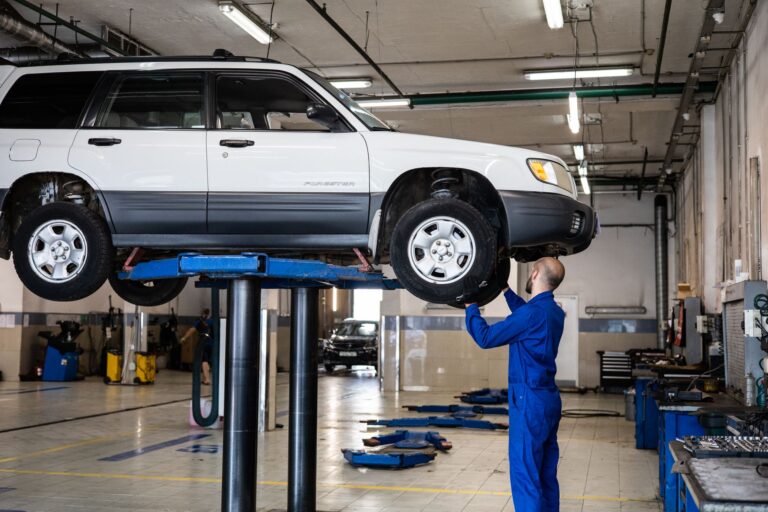 COSTS
How to calculate the real cost of maintaining a vehicle
6 min readRead article →
 PREVENTIVE
Scheduled preventive maintenance: a calendar that gets followed
8 min readRead article →
 CORRECTIVE
Corrective maintenance: when it's unavoidable and how to lower its cost
8 min readRead article →
 AVAILABILITY
How to reduce a fleet's downtime
6 min readRead article →
 CHECKLIST
How the digital checklist generates the corrective ticket
5 min readRead article →
 MASTER DATA
Make and Model Master Data: why it's foundational
6 min readRead article →
 FUNDAMENTALS
What preventive maintenance is and how to apply it in fleets
3 min readRead article →
 COMPARISON
Predictive vs. corrective maintenance: which is better
3 min readRead article →
What people usually ask us about maintenance
If you still have questions, write to us and a specialist will get back to you.
What is fleet maintenance software?
What's the difference between preventive and corrective maintenance?
How do you build a maintenance plan for a fleet?
How does VEC Fleet help prevent costly vehicle failures?
What is over-maintenance and how does the platform prevent it?
Can I keep track of recurring repairs?
Does VEC Fleet let you compare quotes against history?
Can you tell whether a repair is under warranty?
Control maintenance across your entire fleet
Leave us your details and a specialist will contact you to schedule the demo: they'll show you how the maintenance plan is built with your own fleet's vehicles.