Fuel Management Software for Fleets
Full control of fuel spend: every fuel transaction goes through four automatic checks —tank, fuel efficiency, location and card— and you instantly know which one is out of line. Integrate your fuel cards, GPS and ERP in one place.
overall module result
spent auditing fuel transactions
More control, less wasted fuel
Replace manual records with a system that flags every irregularity automatically and gives you the true cost of running your fleet. From logging every fuel transaction to detecting deviations: digitized, integrated and with instant alerts.
Centralize and control all your fuel spend
From logging every fuel transaction to detecting deviations — digitized, integrated and with automatic alerts.
4 checks on every fuel transaction
Every time a fuel transaction is logged, VEC Fleet runs 4 automatic validations. If any of them fails, the transaction is flagged as invalid and can be reviewed or validated manually.
Fuel Consumption and Cost Dashboard
Dashboards with cumulative spend, liters consumed, average km/liter and cost per liter. Comparisons by vehicle, driver, model and period to spot inefficiencies.
GPS Location of Every Fuel Transaction
Every fuel transaction is geotagged. Verify that the vehicle was at an authorized gas station at the time of refueling, with a configurable distance tolerance.
Fuel Transaction Log
Log every fuel transaction with date, time, liters, fuel type, amount, odometer and refueling location. The system automatically checks it against the kilometers driven since the previous fill-up and the model's tank capacity.
Six capabilities, and what each one saves you
Fuel transaction log
Every fuel transaction comes in with date, time, liters, fuel type, amount, odometer and refueling location: from the app, via the provider's file or via API.
What you gain: no manual data entry or Excel cross-checks.
Fuel card integration
Connect your fuel card provider via API or upload the report downloaded from its portal. Transactions are ready for the four checks.
What you gain: the data comes from the provider, not from a spreadsheet.
Consumption grid and dashboard
Cumulative spend, liters, km per liter, cost per liter and cost per kilometer, with comparisons by vehicle, driver, model and period.
What you gain: you know what it costs to run each vehicle.
Location of every fuel transaction
Every fuel transaction is geotagged and checked against the vehicle's position at the time of refueling.
What you gain: a fill-up made far from the vehicle shows up in red.
Fuel efficiency and tank by model
You set the expected fuel efficiency and tank capacity for each model. Every fuel transaction is evaluated against those parameters, with configurable tolerance.
What you gain: abnormal consumption shows up on the very next fill-up.
Export to Excel
Export the grid with the columns you need and filter by period, region, model, base, license plate, refueling location or status.
What you gain: audits and reports for the finance team in minutes.
Companies that trust VEC Fleet


What changes when management gets organized
of maintenance
“Twenty-five percent on truck maintenance costs.” Transcruz managed its fleet in Excel, with reports arriving up to 20 days late. They evaluated nine systems before choosing VEC Fleet.
“It helped us organize our daily processes. It improved repair tracking, profitability and the vehicles sidelined for repairs.”
“It's hard to find providers that work like this. They listen to us, they understand us, they come up with proposals when needed, they're always there.”
Average of 33 verified reviews from VEC Fleet users on Capterra, GetApp and Software Advice.
Capterra and GetApp data as of October 2026.
Fuel transactions come in on their own: cards, GPS and ERP
It's the module's most distinctive capability. Data isn't entered by hand: it comes from the fuel card provider, is cross-checked with telematics and ends up in your management system.
The vehicle's position is compared with the station at the time of refueling, and mileage comes from telematics to calculate the actual fuel efficiency and cost per kilometer of each vehicle.
See all integrationsTo us, they're not vendors; they're strategic partners. We consolidate our vendors' information and cross-reference the data, building a large data source that lets us identify trends.
From the pump to the report in four steps
The fuel transaction is logged
Via app, card or import. Date, time, liters, amount, fuel type and location are recorded.
VEC Fleet validates it
The four checks run: tank, fuel efficiency, location and card.
It flags deviations
If a check fails, the fuel transaction is marked invalid and shows up in red. It gets reviewed, edited or validated with a justification.
You analyze and optimize
With the history you see the highest-spend vehicles, abnormal consumption and the actual cost per kilometer.
Fleet fuel management guide
What a fleet manager needs to know so that every liter pumped ends up in the right tank: where fuel gets lost, what an invalid fuel transaction is, how expected fuel efficiency is defined and which KPIs to track.
What is fuel management in a fleet?
It means logging every fuel transaction for every vehicle and comparing it against what that vehicle should have consumed. Four things are checked: how much was filled, against the model's tank capacity; the fuel efficiency, against the kilometers driven since the previous fill-up; where it was filled, against the vehicle's location; and with which card, against the one assigned to that vehicle.
The difference from reviewing the card statement at the end of the month is timing: the check happens when the fuel transaction comes in, not after the fact.
Where does fuel get lost in a fleet?
In three places. Fuel that never makes it into the vehicle's tank: fill-ups larger than the tank capacity, fill-ups far from where the vehicle was, or with another vehicle's card. Consumption above what's expected: vehicles or drivers with lower fuel efficiency than their model. And administrative time: hours cross-checking the provider's file against drivers' reports.
What are the signs of fuel fraud?
A fill-up that exceeds the model's tank capacity. A fuel transaction logged at a station far from where the GPS places the vehicle. A card used on a vehicle it isn't assigned to. Fuel efficiency that drops with no change in route or load. None of these proves fraud on its own, but any of them justifies reviewing the transaction.
What is an invalid fuel transaction?
It's a fuel transaction that failed one of the checks: the volume exceeds what fits in the tank, the location doesn't match the vehicle's, the card isn't the assigned one or the fuel efficiency doesn't add up. In VEC Fleet the failed check shows in red and the transaction is marked invalid, so someone reviews it before it's accepted.
What is expected fuel efficiency and how is it defined?
It's the consumption each vehicle model should have, expressed in liters per 100 kilometers. It's defined once per model, along with the tank capacity, and it's the benchmark the actual fuel efficiency of each fill-up is compared against. Without that data there's no way to know whether a vehicle is consuming too much.
Which fuel KPIs should you track?
Actual vs. expected fuel efficiency per vehicle and per driver, fuel cost per kilometer, the number of invalid fuel transactions and liters per cost center. Together they show whether the problem lies with the vehicle, the driver or the operation.
Is a spreadsheet enough to manage fuel?
For a few vehicles, it works as a first step: it forces you to log every fill-up and calculate fuel efficiency. The limit shows up with volume. A spreadsheet doesn't check against location or card, and cross-checking with the provider's file is done by hand and late.
How do you lower a fleet's fuel costs?
By checking every fuel transaction to cut out the ones that don't go into the tank, comparing actual vs. expected fuel efficiency to find vehicles and drivers that consume too much, and watching what drives consumption up unnoticed, like tire pressure. The savings come from combining those levers, not from just one.
Fuel management for freight trucks
In a truck fleet, fuel is the number one variable cost and the one that deviates the most: high-capacity tanks, off-route fill-ups, cards changing hands between shifts. The four checks are configured per model, so a tractor-trailer and a delivery van are each evaluated against their own tank and their own expected fuel efficiency.
Start with a spreadsheet; switch when it no longer cuts it
For a small fleet, a well-built spreadsheet handles fuel logging. It stops being enough at three points, and it's worth recognizing them:
You need to cross-check the fuel card provider's file against drivers' reports. Nobody looks at fuel efficiency until the end of the month. The fleet outgrows what one person can track by hand.
The fuel management spreadsheet we built for fleets, with the fields for every fill-up and the fuel efficiency calculation.
Download the spreadsheet →Everything we've written about fuel management
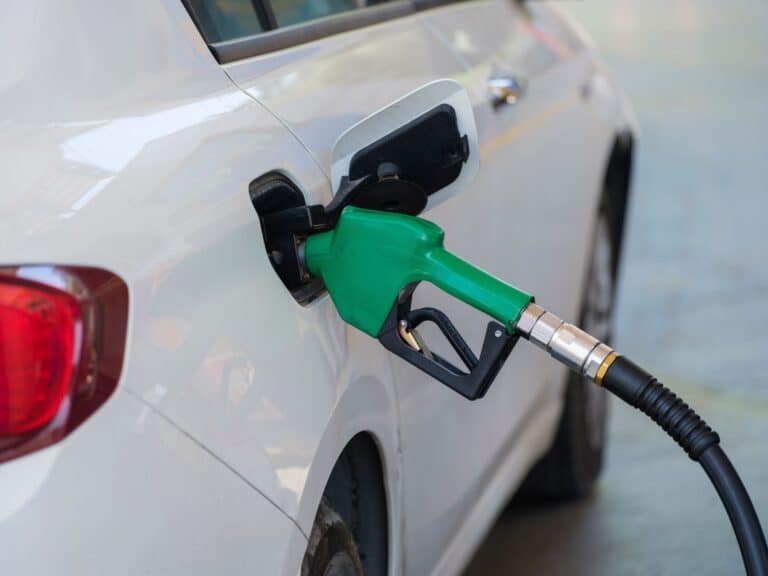 GUIDE
GUIDE
Complete guide to fleet fuel management
5 min readRead article →
 FUNDAMENTALS
Fleet fuel management: the 5 key pillars
9 min readRead article →
 SAVINGS
Cut fuel costs by 12-18%: the 5 levers
7 min readRead article →
 FRAUD
Fleet fuel fraud: the 7 most common signs
9 min readRead article →
 INVALID FUEL TRANSACTIONS
How to detect invalid fuel transactions and take action
9 min readRead article →
 FUEL EFFICIENCY
Expected fuel efficiency by model: how it's calculated
9 min readRead article →
 KPIS
Key KPIs to control consumption
5 min readRead article →
 TOOL
Fuel management spreadsheet (free)
6 min readRead article →
What people usually ask us about fuel
If you still have questions, write to us and a specialist will get back to you.
How does VEC Fleet help detect fuel fraud or deviations?
Can it integrate with fuel cards from different gas station brands?
What data is recorded for each fuel transaction?
Can I access reports segmented by cost center or vehicle?
How is each vehicle's fuel efficiency calculated?
What operational benefit does this fuel module offer?
How does it improve the productivity of the admin team?
What is a fleet fuel management system?
Which app should you use to manage a fleet's fuel?
How much can you save with fuel management?
Cut fuel spend across your entire fleet
Leave us your details and a specialist will contact you to schedule the demo: they'll show you the four checks on your own fleet's fuel transactions.