How many tons does a rabón, a torton, or a trailer carry?
Knowing how many tons a rabón, a torton, or a trailer carries is one of the most frequent questions when planning a transport operation. Load capacity defines how much a unit can move per trip, what type of merchandise it can transport, and what level of operational demand it implies.
- May 19, 2026
- Updated: May 19, 2026
- Leandro Mataloni
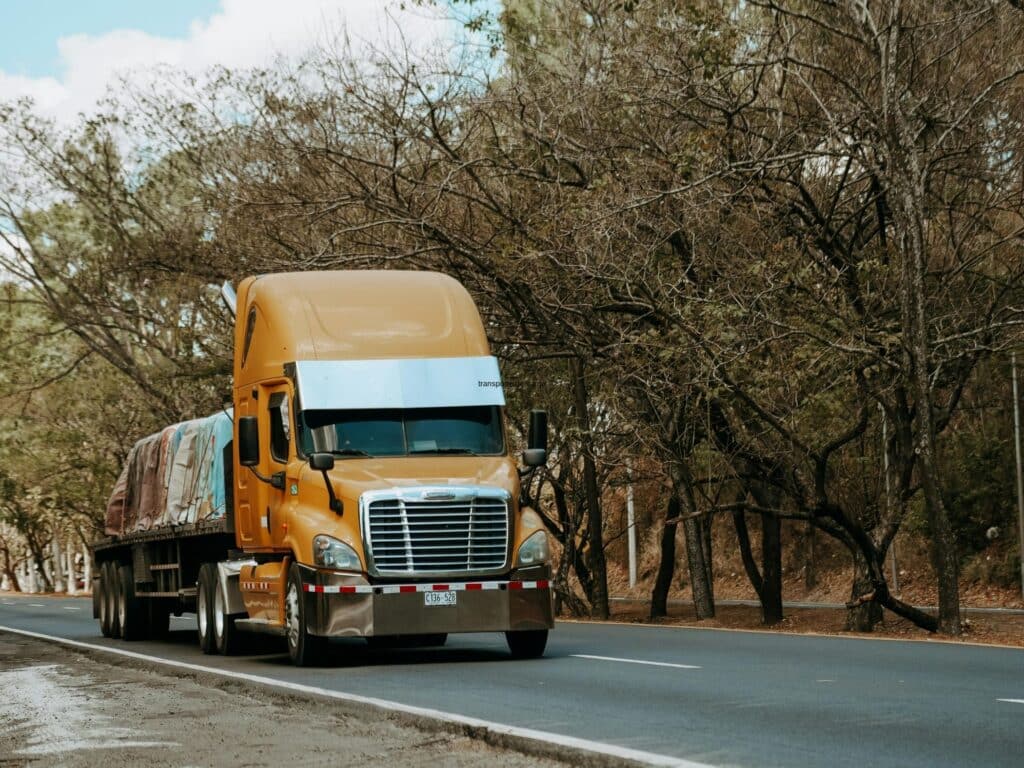
This article answers the question directly, with reference values by vehicle type and the factors that can modify those numbers. If you’re looking for deeper information on dimensions, axle weight, classification, or trailer boxes, at the end of each section you’ll find the specific blog articles.
Quick table: load capacity by vehicle type
Useful load = GVW − empty vehicle tare. Values are indicative and vary by country, axle configuration, box type, and current regulations. To understand the difference between GVW, tare, and useful load, check the comprehensive weights and dimensions guide.
- Rabón: 6-8 tons of useful load · GVW reference 11-12 t · 2 axles.
- Torton: 14-18 tons of useful load · GVW reference 20-22 t · 3 axles.
- Single trailer: 28-32 tons of useful load · GVW reference 40-45 t · 5-6 axles.
- Full or double trailer: 45-52 tons of useful load · GVW up to 66 t · 7-9 axles.
How many tons does a rabón carry?
A rabón typically transports between 6 and 8 tons of useful load, with a reference GVW of 11 to 12 tons. It’s a rigid 2-axle truck, ideal for urban and regional distribution of dry or general cargo: food, paper, pallets, commercial merchandise.
Exact capacity depends on the vehicle’s tare, the type of box installed, and local regulations. In certain specific configurations it may approach 10 tons.
For more detail on this vehicle within the framework of classification by axles and traction, see that article.
How many tons does a torton carry?
A torton transports between 14 and 18 tons of useful load, with a reference GVW of 20 to 22 tons. It’s a rigid 3-axle truck (1 front + 2 rear) used in regional distribution, construction materials, beverages, consolidated cargo, and industrial products.
Its intermediate capacity makes it one of the most versatile units for operations that exceed urban logistics without yet needing an articulated unit. The standard physical measurements of the torton are documented in the specific article.
How many tons does a trailer carry?
A trailer can transport between 45 and 52 tons of useful load in high-capacity configurations (full, double trailer), with a GVW reaching up to 66 tons. In standard single trailers or semi-trailers, useful load typically ranges from 28 to 32 tons.
It’s an articulated unit composed of tractor truck + semi-trailer, common in long-distance, agribusiness operations, exports, and massive cargo transport. Final capacity depends crucially on the type of coupled box and axle configuration. To dive deeper into trailer types and their compatibility with the tractor, see that article.
Factors that can modify real capacity
The useful load shown in the table is a reference range. In real operations, five factors modify it:
- Legal axle weight. A vehicle may be within total GVW but violate the axle weight limit, which is the variable inspected at public scales in LATAM.
- Type of box installed. A refrigerated box weighs more and leaves less useful volume than a dry box of the same length. A platform has less tare but less protection.
- Axle configuration. More axles usually allow more legal cargo, provided distribution is correct.
- Local regulations. Mexico, Argentina, Chile, Colombia, and Brazil have different limits for the same vehicle.
- Route type and road corridor. Urban routes, secondary roads, or special corridors impose additional restrictions that can reduce usable capacity.
📥 Free download: Fleet management guide — 5 main fleet management challenges. Get the ebook →
How to use this information in fleet management
Knowing the theoretical capacity of each vehicle type is not enough. Professional management requires registering real capacity per unit in the management system, including:
- Authorized GVW by license plate.
- Current vehicle tare.
- Available legal useful load.
- Axle configuration and type.
- Type of box installed.
- Route restrictions or specific authorizations.
With that centralized information, VEC Fleet allows correctly assigning each unit to the appropriate trip, detecting overweight patterns that generate abnormal wear on tires and maintenance components, and monitoring operational KPIs filtered by unit type.
Conclusion
A rabón carries between 6 and 8 tons, a torton between 14 and 18, and a trailer between 45 and 52 tons of useful load. These values are useful references for planning, but in real operations they are modified by axle configuration, box type, applicable regulations, and authorized routes.
A professional fleet manages this data per unit, not by general category. And when information is centralized on a platform like VEC Fleet, trip assignment stops depending on the dispatcher’s memory and becomes a decision based on verifiable technical and legal data.
Want to manage your fleet’s load capacity with real data per unit?
With VEC Fleet you can centralize technical information, documentation, maintenance, and indicators from a single platform.
Frequently asked questions
How many tons does a rabón carry?
A rabón typically transports between 6 and 8 tons of useful load, with a reference GVW of 11 to 12 tons. In specific configurations it may approach 10 tons, depending on the vehicle’s tare and local regulations.
How many tons does a torton carry?
A torton transports between 14 and 18 tons of useful load, with a reference GVW of 20 to 22 tons. It’s a rigid 3-axle truck used in regional distribution and consolidated medium-high volume cargo.
How many tons does a trailer carry?
A trailer can transport between 45 and 52 tons of useful load in standard configurations, with a GVW reaching up to 66 tons in high-capacity schemes like full or double trailers. Exact capacity depends on box type and axle configuration.
What’s the difference between GVW and useful load?
GVW (gross vehicle weight) is the total permitted weight of the vehicle in operation, including tare, cargo, fuel, and occupants. Useful load is only the weight of merchandise it can transport, calculated as GVW minus tare. A truck can be within total GVW and still violate axle weight if cargo is poorly distributed.
Is load capacity the same in all countries?
No. It depends on local regulations, number of axles, axle weight distribution, road corridor, and vehicle configuration. Mexico, Argentina, Chile, Colombia, and Brazil have different regulatory frameworks, and within each country there are differences by route type.
How does VEC Fleet help manage load capacity?
VEC Fleet centralizes the technical sheet per unit (GVW, tare, legal useful load, axle configuration), allows associating documentation and authorizations, and facilitates correct trip assignment by appropriate unit. BI dashboards allow cross-referencing capacity with costs, wear, and operated routes.