Cargo transport weights and dimensions: comprehensive guide to operate without errors
Cargo transport weights and dimensions are one of the most critical variables in any logistics operation. They not only determine how much a unit can transport, but also where it can circulate, what operational risks it implies, what wear the vehicle will suffer, and how exposed the company is to penalties or deviations.
- May 12, 2026
- Updated: May 12, 2026
- Leandro Mataloni
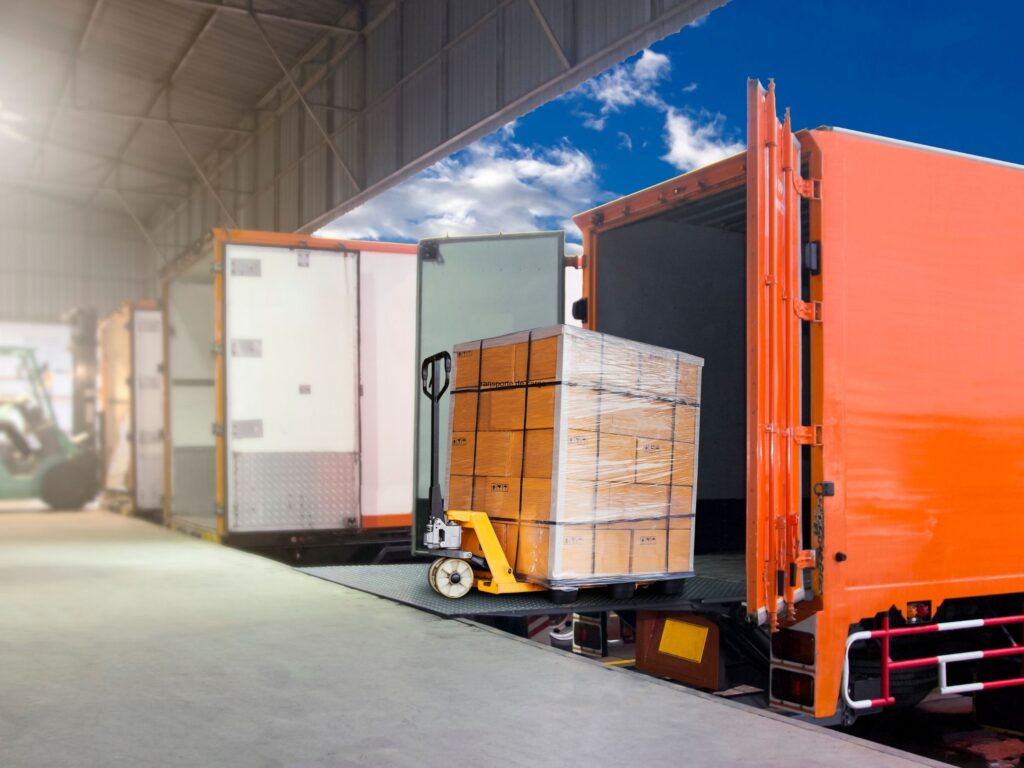
In many organizations, control of these variables is still managed manually or incompletely. The problem is that a poor estimation of length, width, height, or gross vehicle weight can lead to fines, immobilizations, maintenance overcosts, higher fuel consumption, and even safety incidents.
That’s why properly managing cargo transport weights and dimensions is not just a technical issue. It’s a practice of compliance, efficiency, and operational control. This article works as a comprehensive guide and serves as a starting point for specific topics we cover in detail in other blog posts, such as standard cargo truck dimensions and axle weight limits and fines in LATAM.
In the following sections you’ll see what variables to control, what operational errors are frequent, how to structure control in a professional fleet, and how to digitize this process to reduce risks.
The two dimensions of the problem: physical and regulatory
Weight and dimension control operates on two simultaneous planes that many companies confuse or manage separately:
Physical dimension. What the vehicle can physically do — how much it measures, how much it can carry, how much it wears under different conditions. It’s an engineering problem.
Regulatory dimension. What the vehicle can legally do depending on the country, route, and load configuration. It’s a compliance problem.
A unit may be technically capable of transporting more than what is legally permitted to circulate. And there is the point that many operators overlook. Penalties do not arise from exceeding the technical limit of the vehicle, but from exceeding the regulatory limit of the jurisdiction. A professional fleet manages both planes in an integrated way.
Why these variables impact operations so much
Cargo transport weights and dimensions affect at least seven operational dimensions, often simultaneously:
- Road safety — braking, stability, maneuver capacity.
- Truck useful life — tires, suspension, chassis, engine, transmission.
- Fuel consumption — a truck with poorly distributed weight can consume between 10% and 20% more.
- Route selection — not all routes allow the same dimensions or weights.
- Licenses and permits — some configurations require specific authorizations.
- Documentary compliance — certain records must match the actual dimensions of the vehicle.
- Total cost of operation — fines, immobilizations, corrective actions, early replacements.
When a company does not control these factors precisely, the operation becomes more vulnerable to errors that often seem minor at first but end up affecting costs, times, and compliance.
What is meant by weights and dimensions: key variables
When talking about cargo transport weights and dimensions, it’s worth differentiating some basic variables.
Physical dimensions
These are the measurements of the vehicle or its transport configuration:
- Total length.
- Total width.
- Total height.
- Useful height of box or trailer.
- Distance between axles.
The reference values per unit type are covered in depth in standard dimensions of trailers, torton, and cargo trucks.
Gross Vehicle Weight (GVW)
The GVW includes the total weight of the unit in operation:
- Weight of the empty vehicle (tare).
- Weight of the cargo.
- Fuel.
- Driver and occupants.
- Other onboard items.
This data is especially important because many regulatory restrictions are defined based on it.
Axle weight
Axle weight measures how the GVW is distributed among the different axles of the vehicle. Two trucks with the same GVW can have a completely different distribution, and one may be in violation while the other complies. This is a complex topic we address in detail in axle weight on cargo trucks: legal limits and fines in LATAM.
Axle configuration
The number and type of axles modifies both the legal capacity and the operational behavior of the vehicle. To better understand this point, you can consult the cargo truck classification by axles and characteristics.
General limits as operational reference
Although weights and dimensions depend on the regulations of each country, there are ranges commonly used as operational reference on many LATAM routes.
These values may vary depending on the country, number of axles, type of cargo, trailer configuration, and current regulations. In urban areas, secondary routes, or special corridors, limits are usually more restrictive.
Practical rule: never operate with absolute maximum values as a target. Working with a 10-15% margin below the limit drastically reduces exposure to penalties from borderline measurements at public scales.
📥 Free download: Fleet management guide — 5 main fleet management challenges. Get the ebook →
The LATAM regulatory framework: there’s no single rule
One of the most delicate points is that regulation is not uniform in the region. Each country has its own regulatory framework:
- Mexico: NOM-012-SCT-2-2017 on maximum weights and dimensions.
- Argentina: Decree 79/1998 and its updates.
- Chile: MOP Road Manual.
- Colombia: Resolution 4100 of 2004 and complementary regulations from Mintransporte.
- Brazil: Contran resolutions and state legislation.
Additionally, within each country there are differences by road corridor, axle type, specific vehicle authorization, and route category. For a fleet operating in more than one jurisdiction, the challenge is not only knowing the rule but maintaining a system that allows applying it without errors on each trip.
What variables a company with a fleet should control
A company that wants to manage cargo transport weights and dimensions well should work, at minimum, on five points:
1. Exact measurements per unit
Classifying the vehicle as a rabón, torton, or trailer is not enough. It’s advisable to register the actual measurements of each unit, validated against the manufacturer’s homologation and updated if there have been modifications or body changes.
2. Legal and operational capacity
The theoretical capacity of the vehicle does not always coincide with the legal capacity according to local regulations or the assigned route. The value to register in the system is always the most restrictive of the two.
3. Actual weight of each load
The load must be validated before assigning the trip. Assuming weights by habit (or worse, by the dispatcher’s memory) is usually one of the most common sources of error. Weighing at origin is the practice that best solves this problem.
4. Authorized route
Not all routes admit the same dimensions or weights. This point is especially important in urban environments or cross-border operations. Route assignment should be validated against the vehicle configuration before dispatch.
5. Associated documentation
Certain vehicles or configurations require specific permits, insurance, or licenses. A centralized documentary management with automatic expiration alerts is key to avoid compound observations in road controls.
Common errors in weight and dimension management
In many fleets, problems do not arise from absolute ignorance, but from poorly resolved operational habits.
Among the most frequent errors are:
- “Loading a little more because it’s always been done that way” — Habit is not a legal basis. What didn’t generate a fine in years can generate one tomorrow.
- Not considering the weight of pallets, fuel, or accessories — The GVW includes everything onboard, not just the merchandise.
- Using a unit not suitable for a special load — Indivisible or special-dimension loads require specific authorizations.
- Assuming that a rule serves the same in all jurisdictions — A truck circulating legally in Argentina may not comply in Chile, and vice versa.
- Not updating data after modifications or body changes — Changing from a dry box to refrigerated modifies tare, height, and sometimes weight distribution.
- Trusting estimates instead of working with real data — The “operator’s eye” doesn’t hold up on a public scale.
All these errors end up affecting compliance, costs, and safety. And most are solved not with more knowledge but with better processes and better registration.
Impact on costs and productivity
Respecting cargo transport weights and dimensions also has a clear economic effect. It’s not just a compliance practice.
When operations work within appropriate parameters, they achieve:
- Less mechanical wear, particularly of critical components such as suspension and tires.
- Less excessive fuel consumption.
- Fewer unplanned corrective actions.
- Greater useful life of tires and powertrain components.
- Better trip planning.
- Fewer stops due to controls or infractions.
Well-managed compliance improves productivity. It doesn’t slow it down.
How to digitize weight and dimension control
As the fleet grows, manually controlling weights and dimensions becomes unsustainable. A platform like VEC Fleet centralizes the control components in a single interface:
- Complete technical sheet per unit — GVW, useful load, tare, axle configuration, real dimensions, and authorizations.
- Documentary management with automatic expiration alerts.
- Infractions control — automated verification, tracking per unit and per driver, identification of risk patterns.
- Preventive maintenance plans adapted by unit type, allowing detection of abnormal wear typical of systematic overweight.
- Business Intelligence dashboards to cross-reference infractions, costs, and wear data.
The differential is not in “controlling a trip better”, but in converting regulatory compliance into a measurable and improvable variable of fleet management.
What should be documented in the management system
To properly manage weights and dimensions, the fleet software or system should register, at minimum, per unit:
- Actual length, width, and height (not just manual values).
- Vehicle type and configuration.
- Axle configuration (single, dual, tandem, tridem).
- Permitted gross vehicle weight.
- Tare.
- Legal useful load.
- Associated documentation with expiration dates.
- Maintenance history.
- Restrictions or special operating conditions.
This allows moving from a logic based on memory or individual experience to orderly and auditable management.
Conclusion
Cargo transport weights and dimensions are not a secondary detail. They are a technical, legal, and operational variable that conditions safety, maintenance, costs, routes, and compliance.
A professional fleet needs to know these variables precisely, keep them updated, and use them to decide better. When the operation does not do so, it exposes itself to fines, premature wear, assignment errors, and loss of efficiency. When it does, compliance stops being an external threat and becomes another variable of operational management.
Platforms like VEC Fleet allow connecting technical, documentary, maintenance, and analysis records in one place, transforming weight and dimension control into part of the daily operational flow.
Want to manage cargo transport weights and dimensions with more control and fewer operational errors?
With VEC Fleet you can centralize technical information per unit, documentation with alerts, infractions, maintenance, and indicators from a single platform.
Frequently asked questions about cargo transport weights and dimensions
What are cargo transport weights and dimensions?
They are the physical and operational parameters that define the size and total permitted weight of a cargo vehicle: length, width, height, gross vehicle weight (GVW), axle weight, and axle configuration. They include both the technical capacity of the vehicle and the legal limits imposed by current regulations in each jurisdiction.
What does gross vehicle weight include?
The GVW includes the weight of the empty vehicle (tare), the transported cargo, the fuel, the driver and occupants, and any other onboard items. It is important because many regulatory restrictions are defined based on this total value, not just the weight of the merchandise.
What happens if a truck exceeds the permitted limits?
It can receive significant economic fines, be immobilized until the load is regularized, suffer accelerated mechanical wear, increase the risk of accidents, and face problems with insurance coverage. If there is an accident with overweight, the insurer may reject coverage, leaving the company exposed to the total cost of damage.
Are weight and dimension limits the same in all LATAM countries?
No. Each country has its own regulations: Mexico (NOM-012-SCT-2-2017), Argentina (Decree 79/1998), Chile (MOP Road Manual), Colombia (Resolution 4100 of 2004), Brazil (Contran resolutions). Additionally, within each country there are differences by road corridor, axle type, and route category.
What are the most common errors when managing weights and dimensions?
The most frequent are: loading by habit without validating actual weight, not considering the weight of pallets and accessories in the GVW, using units not suitable for special loads, assuming a rule is universal across countries, not updating data after body modifications, and trusting estimates instead of real scale data.
How does VEC Fleet help manage these variables?
VEC Fleet centralizes the technical sheet per unit (GVW, dimensions, axle configuration), documentation with automatic alerts, the infractions module with pattern detection, preventive maintenance plans, and BI dashboards. This allows detecting not only punctual overweight events but also operational patterns that generate systematic risk of infractions and abnormal wear.