
The three ways a company brings vehicles into its fleet —purchase, leasing and long-term rental (renting)— split maintenance responsibility differently, and that difference is not an accounting matter: it is an operational one. It determines who chooses the shop, who pays the invoice, who takes on the risk of a major failure and, above all, which costs you need to record to know how much each vehicle really costs you.
The most expensive mistake here is not choosing the wrong scheme. It is managing all three as if they were the same, and paying twice for work that was already included in a monthly fee. This guide compares the three models with an operational focus and explains how to record costs so the numbers add up.
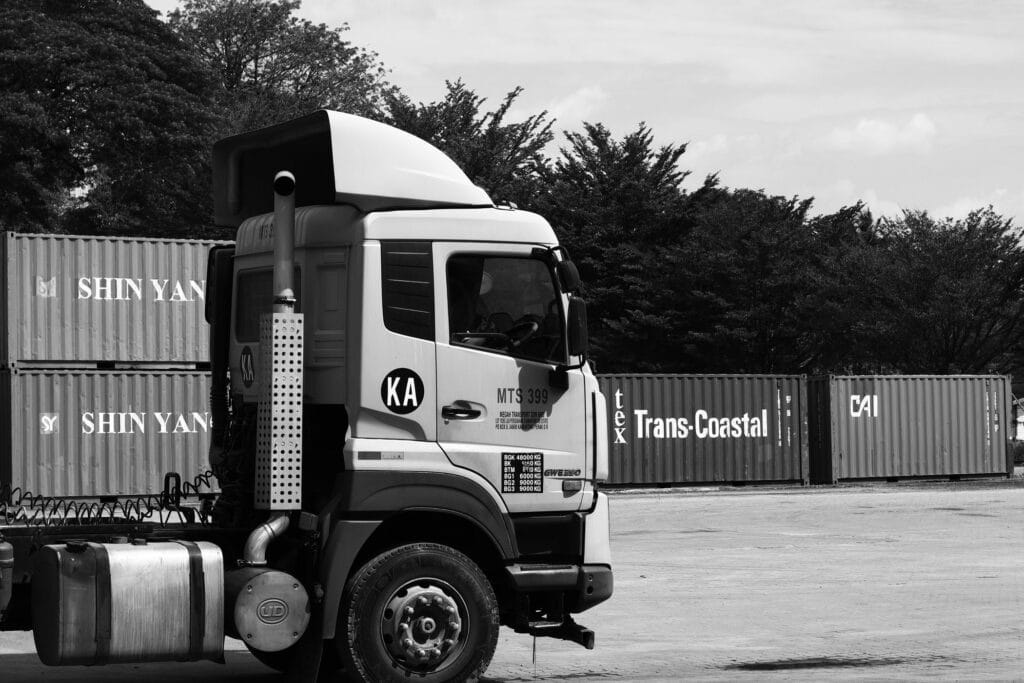
In an owned fleet, the company buys the vehicle and owns it. It bears all maintenance costs, chooses the shops, decides the intervals and defines when to renew. Maximum control and maximum responsibility.
In leasing, the company signs a financial contract, usually with a purchase option at the end. During the contract, the vehicle operates as owned for all practical purposes: the company manages maintenance, chooses the shop and pays for the work. The difference from buying is financial, not operational, except for any conditions the contract sets on the vehicle’s condition at the end of the term.
In renting, the company contracts the use of the vehicle for a period, and maintenance is usually included in the monthly fee, with a scope defined by contract. It is the scheme in which the company takes on the least operational management and, for that very reason, the one that demands the most control discipline.
In an owned fleet the answer is straightforward: preventive work, corrective work, parts and tires are company costs. The manufacturer’s warranty covers part of it during the first years, and taking advantage of it depends on the vehicle following the maintenance plan, because failing to do so is the most common reason warranty claims are rejected.
In leasing the cost structure is equivalent. What changes is the end of the contract: the condition in which the vehicle is returned, if the purchase option is not exercised, translates into charges. Neglected maintenance comes back as a cost at closing.
Renting is where the real fine print lies, because two contracts that look the same can cover very different things. You have to read precisely the scope of preventive maintenance, whether corrective work has an annual cap, whether tires are included and with what replacement limit, whether there is roadside assistance and what counts as uncovered damage. Also the contracted mileage limit, because exceeding it generates a final charge that is rarely planned for.
In renting, duplicate spending does not happen because management is careless. It happens because operations solve problems. A vehicle needs an oil change, the person in charge of that base takes it to the usual shop, pays, and that invoice comes in as just another expense. The work was already included in the fee, but nobody at the moment of the decision had the contract scope at hand.
The pattern repeats with tires, which tend to be the highest-cost item among those covered, and with roadside assistance, which is sometimes contracted separately because nobody knew it was included. The flip side is just as common: services included in the fee that are never used are money the company already paid and does not take advantage of.
Neither problem is solved with more controls over operations. They are solved by making the contract scope information that is available at the moment someone decides to take a vehicle to the shop.
The acquisition scheme is a contractual fact, not a switch you turn on. What you can decide, and what determines whether the cost analysis is useful, is how every dollar is classified and allocated.
Three definitions are enough for most fleets. The first is the Expense Types structure in the Extra Expenses module: the renting or leasing fee must be an expense type separate from operational maintenance, because mixing them makes it impossible to compare schemes. The second is allocation to cost centers and bases, which lets you see costs grouped the way the business looks at them. The third is to also record what was consumed within the fee, even if it generates no additional invoice, because otherwise a rented vehicle looks as if it only cost the fee.
With that in order, the vehicle’s expense wheel shows the consolidated view of its costs, and that view starts to be comparable across schemes. The full calculation is laid out in the real cost of maintenance per vehicle.
There is one part the company does not delegate even if the vehicle belongs to someone else: up-to-date documentation and the obligations required to drive on public roads. Vehicle inspection, insurance, registration fees and permits remain the operational responsibility of whoever uses the vehicle, and an expired document takes a vehicle off the road all the same, whether it is owned, leased or rented.
This is managed with Expiration and Paperwork tickets, which record the procedure and its progress. The provider who handles it can be registered as an Agent, just as a shop is registered as a Workshop or a notary as a Notary.
The operational Dashboard shows expired documentation alongside the vehicles in the shop, and the Calendar shows expirations and preventive jobs with a green, yellow or red dot according to urgency, and with the letter T when a ticket is already open.
The decision is rarely purely financial. There are three operational variables that weigh as much as cost.
The first is the length of use. Long cycles favor ownership or leasing, because the cost of maintaining a vehicle that is already paid off is usually lower than a monthly fee. Short cycles with frequent renewal favor renting.
The second is the severity of the operation. A vehicle working in demanding terrain accumulates wear that a standard rental contract does not account for, and condition charges at the end can wipe out the advantage. For tough operations, ownership is usually more predictable.
The third is in-house management capacity. If the company has a shop and a team that handles maintenance with good judgment, ownership pays off; if it does not have that structure and does not want to build it, renting buys that capacity.
That is why many fleets end up with a mix: renting for the administrative fleet, with predictable use and frequent renewal, and ownership or leasing for the critical operational fleet, where control matters more than the predictability of the fee.
If today you have all three schemes mixed together and want to get out of that situation, the order matters. The temptation is to start with the comparative cost analysis, and that is the step to leave for last: without the classification sorted out, that comparison only produces false conclusions.
Start with the contracts. Before touching the system, build a table of what each active contract covers, item by item and up to what limit. It is reading work, not configuration work, and it is usually the first time anyone in the company has that summary in one place.
Then define the Expense Types structure, separating the fee from operational maintenance, and make sure it is the same for the whole fleet. Changing it later invalidates the accumulated history, so it is best to discuss it with the finance team before, not after.
The third step is the one that prevents duplicate spending: making sure whoever decides to take a vehicle to the shop knows what their contract covers. With few vehicles, a clear instruction per base is enough; with more, it is best to have the information visible on the vehicle’s record.
Only then does comparing schemes make sense, and it is best done with at least six months of clean data. Comparing on a half-built history leads to renewal decisions that do not hold up later.
→ Explore the Maintenance module
→ Book a demo
The company. Leasing is a financial contract and operational management stays with whoever uses the vehicle, so the choice of shop and intervals is yours. What is worth reviewing are the contract conditions on the vehicle’s condition at the end of the term, because neglected maintenance comes back as a charge at closing.
Yes, when signing and when renewing. So-called standard scopes are based on an average usage profile that is probably not yours. If your operation wears out tires faster, or if your actual annual mileage exceeds the contracted amount, it is better to adjust those points in the contract than to absorb the difference as end-of-term charges, which turn out more expensive.
By making the contract scope available at the moment of the decision and not in the finance team’s folder. Duplicate spending is almost never deliberate: it is someone quickly solving an operational problem without knowing what the fee covered. A coverage table known by the people who authorize work at each base solves most cases.
It is the norm in mid-sized and large fleets, and it makes sense when usage profiles are different. What does not make sense is for the mix to be the result of isolated decisions with no common criteria. If you can explain why each group of vehicles is under the scheme it is in, the mix is a strategy; if not, it is just an accumulation.
It is best to record both: the fee as its own expense type and the work consumed within the contract, even if it generates no additional invoice. If you only record the fee, the vehicle shows a flat cost and there is no way to know whether the contract is being used well or to compare it against the owned fleet when renewal time comes.

The company. Leasing is a financial contract and operational management stays with whoever uses the vehicle, so the choice of shop and intervals is yours. What is worth reviewing are the contract conditions on the vehicle's condition at the end of the term, because neglected maintenance comes back as a charge at closing.
Yes, when signing and when renewing. So-called standard scopes are based on an average usage profile that is probably not yours. If your operation wears out tires faster, or if your actual annual mileage exceeds the contracted amount, it is better to adjust those points in the contract than to absorb the difference as end-of-term charges, which turn out more expensive.
By making the contract scope available at the moment of the decision and not in the finance team's folder. Duplicate spending is almost never deliberate: it is someone quickly solving an operational problem without knowing what the fee covered. A coverage table known by the people who authorize work at each base solves most cases.
It is the norm in mid-sized and large fleets, and it makes sense when usage profiles are different. What does not make sense is for the mix to be the result of isolated decisions with no common criteria. If you can explain why each group of vehicles is under the scheme it is in, the mix is a strategy; if not, it is just an accumulation.
It is best to record both: the fee as its own expense type and the work consumed within the contract, even if it generates no additional invoice. If you only record the fee, the vehicle shows a flat cost and there is no way to know whether the contract is being used well or to compare it against the owned fleet when renewal time comes.