Trailer box sizes: types, uses and compatibility with tractor truck
Knowing trailer box sizes is essential for any transport, distribution, or logistics operation. The box not only defines how much volume a unit can move. It also conditions the type of merchandise it can transport, compatibility with the tractor truck, the routes it can legally travel, and the efficiency level of each trip.
- May 19, 2026
- Updated: May 19, 2026
- Leandro Mataloni
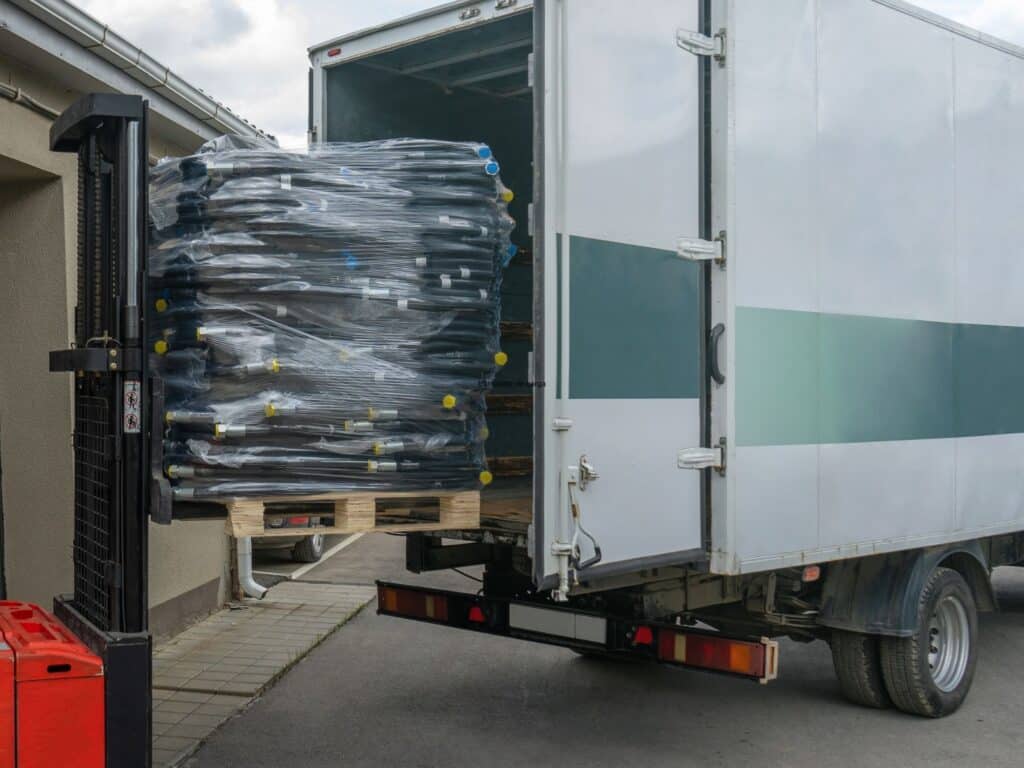
In many companies, trailer assignment is still done by habit or immediate availability. The problem is that a poor choice of box can generate overcosts, underutilization of capacity, loading and unloading delays, technical incompatibilities, or even fines for dimensions or weight.
Unlike general cargo vehicle dimensions or classification by axles and traction, this article focuses exclusively on the trailer or box: what types exist, what typical measurements they have, what products they can transport, and above all, how they correctly combine with the tractor truck that pulls them.
In the following sections you’ll see the most common box types, their usual measurements, how to evaluate technical compatibility with the tractor unit, and what aspects to control to avoid errors in fleet management.
What is a trailer box
A trailer box is the cargo structure that couples to a tractor truck to transport goods. Depending on its design, it can protect, contain, refrigerate, expose, or facilitate the loading and unloading of different products.
There is no single standard box for all operations. Precisely, the diversity of trailer box sizes responds to different needs:
- Dry or general cargo.
- Perishable merchandise.
- Oversized materials.
- Livestock transport.
- Intermodal operation (train, ship, truck).
- Industrial or special loads.
That’s why choosing the right box does not depend only on available space, but also on the type of cargo, the route, the permitted gross vehicle weight, and compatibility with the tractor unit.
Why box size and type matter
Trailer box sizes directly impact operations. Working with a 48-foot dry box is not the same as working with a 53-foot one, nor is an open platform the same as a refrigerated one.
The dimensions and configuration of the box influence:
- Available useful volume.
- Type of transportable merchandise.
- Maneuverability on routes and yards.
- Compliance with legal dimension limits.
- Compatibility with the tractor truck.
- Operational consumption and performance.
- Loading and unloading times.
- Profitability per trip.
A poor choice may make the company transport less than possible, use an oversized unit, or expose the operation to regulatory deviations. To better understand legal weight and dimension limits in LATAM, we recommend reading our comprehensive guide on the topic.
Main types of boxes and their uses
Dry box
It’s the most common and versatile format in the market.
What it’s used for. General cargo: pallets, boxes, sacks, textiles, dry products, electronics, and merchandise that needs protection from weather without temperature control.
Advantages:
- Good volumetric capacity.
- Protection against rain, dust, and external exposure.
- Great flexibility for different industries.
- Easy integration in distribution and long-distance operations.
Typical measurements. The most frequent configurations are 48 and 53 feet. The 5-foot difference may seem minor, but represents about 10 m³ of additional useful volume, which can translate into 1-2 extra pallets per trip.
Refrigerated box
A key variant when merchandise requires controlled temperature.
What it’s used for. Dairy, meat, fruits and vegetables, pharmaceutical, products sensitive to the cold chain.
Advantages:
- Thermal insulation.
- Integrated refrigeration equipment.
- Greater control over cargo quality and preservation.
Important consideration. Although it shares similar dimensions with a dry box, useful volume may be lower due to the thermal system and interior insulation. A 48-foot refrigerated box has between 5 and 10 m³ less useful volume than a dry box of the same length. That’s why, when analyzing trailer box sizes, looking only at exterior length is not enough.
Flat platform or flatbed
It occupies a different place because it does not work with a traditional closed box.
What it’s used for. Machinery, construction materials, metal structures, coils, oversized or irregularly shaped cargo.
Advantages:
- Loading access from all sides.
- Greater flexibility for unconventional merchandise.
- Operational speed in certain contexts.
What to keep in mind. Since it has no walls or roof, it requires better tie-down management, cargo security, and exposure control to weather or handling. The pre-trip checklist is especially critical in this configuration, where poor cargo securing is one of the main causes of accidents.
Cage or livestock trailer
Specific design for live animal transport.
What it’s used for. Cattle, swine, poultry, horses.
Advantages:
- Adequate ventilation.
- Design adapted to animal welfare.
- Floors and structure designed for specific operation.
Considerations. The choice does not depend only on volume. It must also consider safety, sanitary regulations (SENASA in Argentina, SENASICA in Mexico), and specific animal transport conditions, with particular documentary authorizations.
ISO container or intermodal box
When the operation combines truck, train, or ship.
Most common measurements. 20 feet and 40 feet, according to ISO standard.
What they’re used for. International logistics, ports, foreign trade, and multimodal operations.
Advantages:
- Global standardization.
- Ease of transfer between modes of transport.
- Better documentary and operational integration.
Its size is strictly regulated by the ISO 668 standard, which guarantees interchangeability between countries and operators.
📥 Free download: Fleet management guide — 5 main fleet management challenges. Get the ebook →
Compatibility between box and tractor truck: what to check
Here is one of the most critical and least managed points: not all boxes are compatible with all tractor trucks. This is the most frequent operational error when assigning by availability instead of by technical planning.
The main factors to review are the following:
Fifth wheel type
The fifth wheel is the mechanical coupling between tractor and trailer. It must match in:
- Height.
- Vertical load capacity.
- Type of semi-trailer kingpin.
- Plate rotation capacity.
An undersized fifth wheel can fail under dynamic stress, with serious consequences.
Engine power and torque
A tractor truck with insufficient power for the towed load:
- Has worse performance on slopes.
- Consumes more fuel.
- Suffers greater clutch and gearbox wear.
- Reduces average trip speed and increases service time.
As a general rule, power must be dimensioned to the combined gross weight of tractor + trailer + cargo, not just the empty tractor.
Brake system
A loaded trailer requires a brake system that can stop it safely. Compatibility includes:
- Pneumatic connection (ABS/EBS).
- Tractor compressor capacity.
- Trailer brake type (drum or disc).
A mismatch at this point directly compromises road safety.
Number of axles and axle weight
Weight distribution per axle depends on the tractor + trailer + cargo combination. A 3-axle trailer may be correct for certain cargo but generate axle overweight if combined with a tractor of a certain configuration.
Applicable road regulations
Certain configurations (road train, double trailer, special loads) require authorized routes and specific permits. Before assigning the trip, you must validate that the tractor-box combination can legally circulate on the planned route.
Which box to choose according to your operation
Choosing well among the different trailer box sizes depends on the type of merchandise and the logistics context.
The right decision not only improves capacity and times. It also reduces assignment errors and avoids using inadequate units for the transported merchandise.
Common errors when choosing a trailer box
When working with trailer box sizes, there are several frequent errors to avoid:
- Choosing only by availability and not by technical compatibility.
- Using a larger box without real volume need, generating extra fuel cost and operational complexity.
- Ignoring legal limits by route or road corridor.
- Not considering the type of merchandise — dry cargo in a refrigerated box is expensive; refrigerated in a dry box compromises quality.
- Not registering real measurements per unit, trusting general categories.
- Not relating box, tractor truck, and corresponding documentation in the management system.
An incorrect choice may seem like a minor detail but ends up impacting costs, productivity, and compliance.
How to manage a fleet with multiple box types
In operations where tractor trucks coexist with different trailer types, the challenge is not to choose a good box occasionally, but to maintain the correct assignment system over time. That implies having, for each trailer, updated information on:
- Type and real measurements.
- Useful load capacity.
- Specific documentation (authorization, insurance, last inspection).
- Compatible tractor trucks.
- Maintenance history.
- Known operational restrictions.
With this centralized information, VEC Fleet allows assigning each trailer to the optimal combination of tractor + route + cargo, controlling preventive maintenance adapted to each box type, monitoring operational indicators on filterable dashboards by unit type, and maintaining each trailer’s documentation with automatic expiration alerts.
The differential is not in managing a single box, but in being able to assign correctly and traceably any box to any tractor truck within the fleet, systematically.
Conclusion
Trailer box sizes are a central variable in cargo logistics. They define capacity, type of merchandise, technical compatibility, regulatory limits, and operational efficiency.
Choosing the right box should not be based only on habit or intuition. It requires understanding the type of operation, the cargo, the route, the regulations, and — especially — the configuration of the tractor unit it will be combined with. When that information is well documented, the company can plan better, avoid penalties, and get more out of each trip.
And when all that management is centralized on a platform like VEC Fleet, the operation gains order, traceability, and real capacity to make decisions with data.
Want to manage different types of trailer boxes and their tractor trucks with more control and fewer operational errors?
With VEC Fleet you can centralize maintenance, documentation, compatibilities, and indicators per unit from a single platform.
Frequently asked questions about trailer box sizes
What is a trailer box?
It’s the cargo structure that couples to a tractor truck to transport goods. It can be dry, refrigerated, platform, cage, or intermodal, among other configurations. Each type is designed for a specific type of cargo, and its choice depends both on the merchandise and on compatibility with the tractor unit.
What are the most common trailer box sizes?
The most frequent are 48 and 53 feet in dry or refrigerated box (with useful volumes from 85 to 105 m³), flat platforms from 12 to 14 meters, livestock cages from 12 to 15 meters, and ISO standard containers of 20 and 40 feet for intermodal logistics.
Which box is best for perishable products?
The refrigerated box, because it allows maintaining controlled temperature during transport. It’s important to remember that, although it shares exterior measurements with a dry one, the interior useful volume is smaller due to thermal insulation and the refrigeration equipment.
Does the same box fit any tractor truck?
No. You must check fifth wheel compatibility (height, capacity, kingpin type), engine power and torque adequate to total weight, compatible brake system, number of axles and resulting axle weight, and applicable road regulations to the specific combination. Assigning by availability without validating compatibility is one of the main sources of inefficiency and risk.
Why does the size of the box matter in logistics?
Because it affects volumetric capacity, authorized routes, maneuverability, legal compliance, technical compatibility, and operational cost per trip. The difference between a 48 and 53 foot box can mean 1-2 extra pallets per trip, which directly impacts profitability.
How does VEC Fleet help manage trailer boxes?
VEC Fleet allows registering each trailer with its type, measurements, capacity, documentation, and compatible tractor trucks. With this centralized information, you can assign the optimal tractor-box combination per trip, monitor specific maintenance by unit type, control documentary expirations, and analyze KPIs filtered by box category from operational dashboards.