
Implementing a preventive and corrective maintenance methodology is no longer a desirable best practice — it’s an operational necessity. In industrial, logistics, and fleet environments, relying on improvised repairs or “on-the-fly” decisions creates more cost, more failures, and less control.
When there’s no clear methodology, maintenance becomes reactive. Equipment is attended to only when it stops, owners act in emergency mode, records stay incomplete, and operations lose predictability. The result is well known: downtime, cost overruns, low availability, and little capacity to anticipate.
That’s why having a preventive and corrective maintenance methodology lets you organize management, set priorities, and connect every task to a concrete operational goal. It’s not just about repairing or inspecting — it’s about building a system that lets you plan, execute, measure, and improve.
This article walks through what a maintenance methodology is, how to combine preventive and corrective actions within a single strategy, what its phases are, what KPIs to measure, and how to digitize the process to scale it more efficiently.
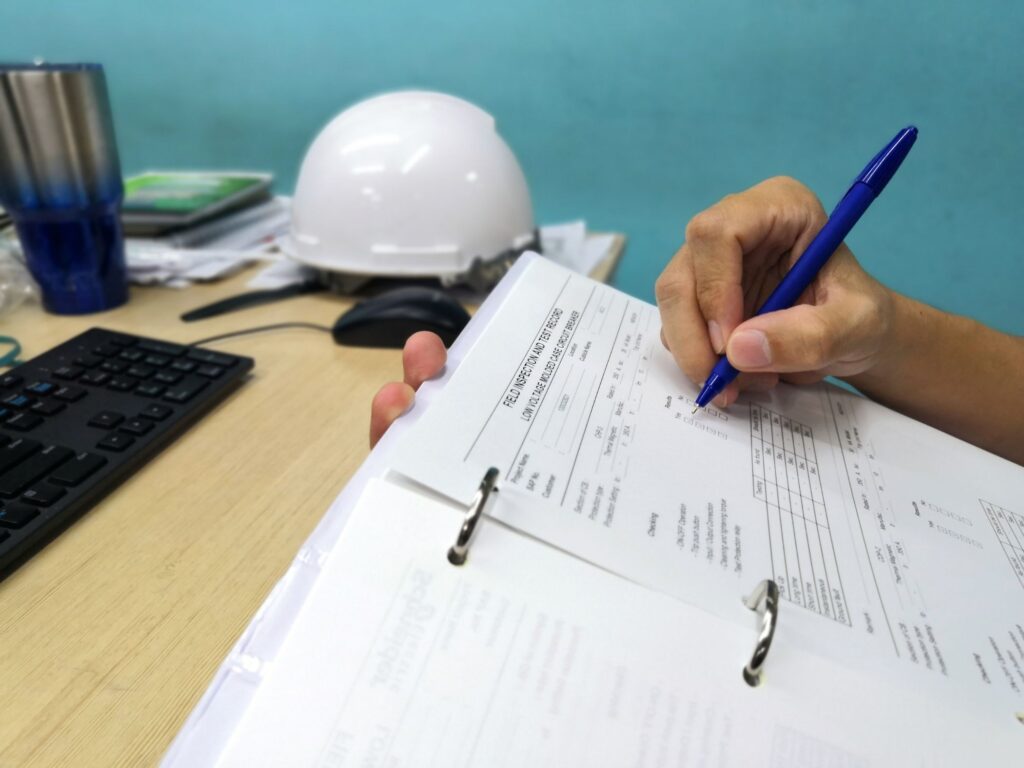
A maintenance methodology is a set of criteria, processes, and tools that organize the way a company manages the care of its assets. Its function isn’t just to define technical tasks — it’s to establish a repeatable, measurable working logic.
A solid preventive and corrective maintenance methodology lets maintenance stop depending on emergencies, individual memory, or scattered spreadsheets. Instead, it creates a framework where every intervention has meaning, priority, traceability, and follow-up.
Its main goals usually are:
To build a solid methodology, you first have to understand the role of each approach. For a deeper look at this distinction, we recommend reading predictive vs corrective maintenance: which is better and what is preventive maintenance.
Preventive maintenance. The set of scheduled tasks performed before a failure occurs. Its goal is to keep the asset in optimal condition and reduce the probability of incidents.
Corrective maintenance. Performed once a failure has appeared or when a deviation is detected that requires immediate intervention.
The key isn’t picking one or the other. An efficient methodology combines both: preventive to anticipate, corrective to respond with order when an incident hits. That integration is the core of a good preventive and corrective maintenance methodology.
Many companies believe they “already do maintenance” because they fix failures or run periodic tasks. But that doesn’t always mean a methodology exists.
The difference is in the level of structure. A well-implemented methodology lets you:
It also helps connect maintenance to business goals: availability, total cost, productivity, compliance, and safety.
The first step is identifying which assets need maintenance and what their operational context looks like. Without this baseline, any plan is incomplete.
The survey should include:
This stage is foundational because it defines the real universe the methodology will work on. In fleets and technical operations, having this information centralized makes later task scheduling and per-unit or per-equipment analysis much easier.
Not all assets have the same operational impact. Some can tolerate a failure without major consequences. Others affect safety, compliance, continuity, or costs immediately.
That’s why a good methodology must classify assets by criticality.
Some factors to evaluate:
This analysis lets you decide where to put more preventive focus and where to accept some level of corrective without compromising the business.
Once assets and their criticality are identified, you need to define the preventive tasks needed to sustain their performance. These tasks can come from:
Some examples:
At this phase, the methodology takes operational shape — it converts general criteria into concrete actions.
The master plan organizes all preventive tasks by frequency, owner, required resources, and estimated execution time. Here you define:
This plan must be realistic. A common mistake is loading too many tasks without considering operational capacity, time, or usage context. A useful methodology isn’t the one with the most tasks — it’s the one that achieves compliance and results.
On management platforms like VEC Fleet, this master plan is structured through a Plan → Services → Tasks logic, which lets you tie each action to an asset, a frequency, and a specific owner.
Even if the goal is prevention, incidents will always happen. That’s why the methodology must include a clear process for handling correctives without falling into operational chaos.
That process should consider:
Incident logging. Every failure must be entered in a standardized way, ideally through a ticket or digital report.
Prioritization. Not every corrective has the same urgency. They have to be classified by impact, safety, and criticality.
Diagnosis. Before intervening, the team needs minimum information to understand the problem and assign appropriate resources.
Resolution. The task must run with traceability: owner, time, parts, cost, and evidence.
Closure and post-analysis. A mature methodology doesn’t close the cycle when the repair is done. It also analyzes why the failure happened and what preventive adjustment can avoid it next time.
A methodology doesn’t run on intent alone. It needs operational support. The minimum elements usually are:
When these resources aren’t planned for, even the best plan ends up unraveling in practice.
Digitizing the preventive and corrective maintenance methodology lets you go from scattered management to a more traceable and scalable operation. With the right platform you can:
VEC Fleet lets you digitize maintenance processes, generate automated plans by km, hours, or time, manage tickets, centralize asset history, and monitor operations through dashboards with real-time indicators.
This approach turns the methodology into a 360° operation that centralizes maintenance, fuel, and documentation in one interface, supported by operational KPIs to measure real impact.
📥 Free download: Fleet Management Guide — 5 main challenges. Get the ebook →
To better understand how a preventive and corrective maintenance methodology works, let’s think about a fleet with 25 delivery trucks and 10 administrative vehicles.
Possible preventive tasks:
Frequent correctives:
Useful indicators:
On a platform like VEC Fleet, this kind of management can be organized through preventive plans, tickets, per-unit history, operational dashboards, and response-time control.
Measuring results is essential. Without indicators, there’s no way to know whether the methodology is working or just generating administrative load.
The most useful KPIs usually are:
MTBF (Mean Time Between Failures). Measures average time between failures. Helps evaluate reliability.
MTTR (Mean Time To Repair). Measures average repair time. Helps evaluate response capacity.
Preventive plan compliance percentage. Shows whether planned tasks are actually being executed.
Preventive vs corrective ratio. Helps understand whether operations are too exposed to emergencies.
Unplanned downtime hours. Measures real impact on operational availability.
Maintenance cost per asset or unit. Lets you compare performance and detect deviations.
To go deeper into how to choose and monitor these indicators, you can check data analysis for fleet management.
Several mistakes tend to weaken the process:
Avoiding these mistakes is as important as designing the initial plan well.
Implementing a preventive and corrective maintenance methodology doesn’t just organize tasks. It also changes how the company manages its assets, resources, and response capacity.
When maintenance stops being an improvised reaction and becomes a structured process, operations gain predictability, reduce failures, and improve efficiency. Preventive helps anticipate. Corrective lets you resolve in an orderly way. The methodology integrates both to turn them into an operational advantage.
With a solution like VEC Fleet, that methodology can run in a more digital, centralized, and measurable way, integrating maintenance, tickets, operational follow-up, and analytics within a single platform.
Want to implement a preventive and corrective maintenance methodology with more control and less improvisation?
With VEC Fleet you can schedule tasks, generate tickets, assign owners, centralize each asset’s history, and monitor key indicators from a single platform.
It’s an organized system to plan, execute, record, and improve maintenance tasks, combining preventive and corrective actions within a single strategy. Its function is to establish a repeatable, measurable working logic that replaces improvisation with a structured process.
Because it lets you reduce unexpected failures, organize resources, improve operational availability, and measure results more precisely. It also helps connect maintenance to business goals like availability, costs, productivity, regulatory compliance, and safety.
Preventive maintenance happens before a failure occurs, with scheduled tasks designed to avoid incidents. Corrective is performed after a problem is detected and aims to restore operations. A good methodology integrates both: preventive to anticipate and corrective to respond with order.
It includes asset survey, criticality analysis, definition of preventive tasks, building a master plan, corrective ticket management, resource assignment, process digitization, and follow-up with KPIs.
The most common are MTBF (mean time between failures), MTTR (mean time to repair), preventive plan compliance percentage, corrective vs preventive ratio, unplanned downtime hours, and cost per asset or unit.
It helps centralize management, automate tasks, generate corrective tickets, record per-asset history, and visualize operational indicators from real-time dashboards. All from a single platform that integrates maintenance, fuel, documentation, and inspections.