How to build the vendor and shop network for a multi-base fleet
A fleet operating from a single base gets by with two or three trusted shops a few kilometers away. A multi-base fleet doesn’t: each base adds a different geography, a different availability of shops and a local manager who, if nobody defines the criteria, will build their own list.
The usual result is a network nobody designed: duplicate vendors in one area, entire areas without coverage and no way to compare one against another. This guide explains which types of vendor you need, what the minimum coverage per base is, which criteria to evaluate a shop with and in what order to build the network.
- November 26, 2026
- Actualizado: November 26, 2026
- Leandro Mataloni
The three types of fleet vendor
A vendor is classified into three types according to the work it performs. The distinction isn’t bureaucratic: each type has a different cycle, frequency and counterpart.
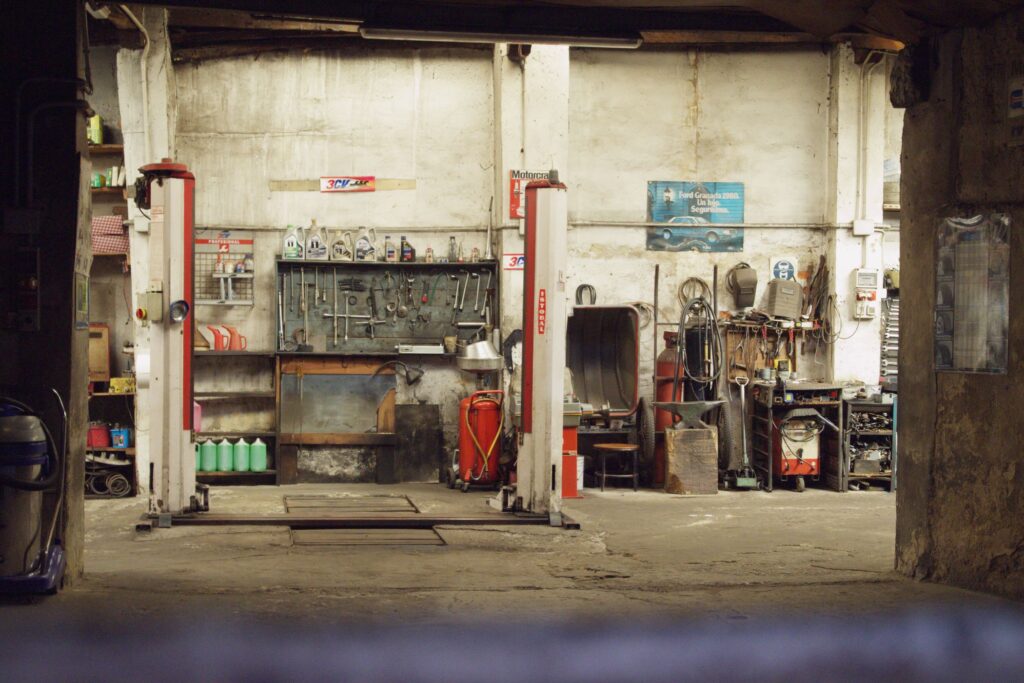
Shop. It does the mechanical work, that is, Corrective and Preventive tickets. It can be a contracted external shop or the company’s own shop, in which case the work is recorded as self-management.
Gestor (paperwork agent). Handles administrative procedures: renewals, technical inspections, permits, transfers. It mainly works on Expiration and Gestoría tickets. Its cycle is measured in weeks and is almost always tied to a non-negotiable legal date.
Notary. Steps in for procedures that require notarization. Its use is occasional but critical: when you need one, there is no quick alternative.
Operational volume is concentrated in the first type, but the other two concentrate risk: a preventive service one week late is a cost problem; an expiration one week late is a vehicle that can’t be on the road.
Coverage per base: the criterion that orders everything else
In a multi-base fleet, the Base is the unit of operational grouping: the branch, depot or location from which a set of vehicles operates. The network is designed base by base, not at the corporate level, because a shop 400 km away covers nothing even if it is on the list.
The reasonable minimum coverage for a base with daily operations is two shops able to handle corrective repairs on the models you have there, one shop with capacity for major work (which can be shared with a nearby base) and one gestor for that jurisdiction’s procedures.
The two-shop rule is the most debated and the most missed when it isn’t there. With a single shop, any saturation of its schedule translates into downtime, and you have no negotiating leverage: the vendor knows you have nowhere else to go.
What doesn’t work is replicating the same structure at every base. A base with six vehicles and one with eighty don’t need the same network, and the sizing criterion is the actual ticket volume over the last year, not the number of vehicles.
Five criteria to evaluate a shop before giving it volume
- Technical capability for that base’s models. A shop specialized in light vehicles can’t fix a truck, and one that has never worked on a brand takes twice as long to diagnose. Validate against the base’s actual list of models, not the whole fleet’s.
- Committed response capacity. How long it takes to receive a vehicle, diagnose it and return it. It is an agreement that is discussed and documented in the contract, and that you will later compare against the actual times you record.
- Parts handling. Critical for vehicles under warranty, where a non-original part can void coverage. Also ask about supply: a shop that depends on a single distributor passes every delay from that distributor on to you.
- Willingness to work against a ticket number. That it agrees to identify each job with your order reference, report status when asked and deliver an itemized cost. Without this, every job is an after-the-fact reconstruction from an invoice.
- Verifiable references. Other fleets that have worked with that shop. It is the least technical criterion and the one that most often anticipates the problems that show up in the sixth month.
A shop that fails two or more of these criteria shouldn’t receive sustained volume, even if its price is the best in the area.
Self-management or external management: how to decide
Self-management is work done in the company’s own shop, as opposed to external management. It isn’t an ideological decision: it is decided base by base and reviewed when volume changes.
Self-management makes sense when there is high, sustained volume at the same location, when the work is repetitive and predictable, and when you need control over the order of priorities, that is, when it matters to you to be able to decide which vehicle goes in first.
External management makes sense when volume is low or seasonal, when the variety of models requires specializations you can’t have all in-house, and when that base’s operation may grow or shrink.
Most mid-sized and large fleets end up with a mixed model: an in-house shop at the highest-volume bases and an external network for the rest. If the in-house shop’s cost per ticket is never compared with that of external shops in the same area, self-management stops being a decision and becomes an assumption.
What the system records and what happens outside it
It is worth being precise here, because this is where the most mistaken expectations arise. Coordination with an external shop happens outside the system: it is a call or an email to agree on when the vehicle goes in and what will be done. What the system does is something else.
The Ticketing system centralizes work orders. Every corrective, preventive, expiration or Gestoría process is recorded as a ticket linked to a vehicle, with its vendor and its type of work. On that basis, two times are measured, in days: TP, partial time, which counts the days since the ticket’s last status change, and TT, total process time. TP shows how long a process has been stuck in its current step; TT, how long the whole thing took.
That turns a conversation about perceptions into one about data. When a base manager says a shop “always takes forever”, the accumulated TT for the last three months confirms or refutes it.
The cost of each process is linked to the vehicle and consolidated in the expense wheel, the cost view per vehicle. That is where you see whether the cheap shop in the north zone is actually cheaper once you add up the repeat jobs.
→ Book a VEC Fleet demo
→ Explore the Maintenance module
In what order to build the network
The most frequent mistake is to start by negotiating prices and times with the vendors you already have, before knowing what you need and how much weight each one carries. It ends in signed agreements with shops that shouldn’t be in the network.
First, measure actual demand per base. Take last year’s tickets grouped by base and by type. You will discover that volume isn’t distributed like the number of vehicles: there are bases with few vehicles and a heavy corrective load, almost always because of age or type of use.
Second, decide self-management or external for each base. This definition determines how many external vendors you really need. Doing it the other way around is the most common cause of bloated networks: external shops are added to a base that already had idle in-house capacity.
Third, close minimum coverage before trimming. A base without a shop is worse than a base with a mediocre one: first the replacement, then the removal.
Fourth, only then agree on times and conditions. With the network defined and volume to offer, the negotiation is different: a shop accepts time commitments when it sees predictable volume on the other side.
Fifth, let three months go by before drawing conclusions. The first months of measurement are noisy: new processes, people learning to close tickets, poorly recorded times. Dropping a vendor based on six weeks of data is dropping it because of the noise.
After that, two different reviews: individual performance every quarter and the network structure once a year.
Frequently asked questions
How many vendors do I need per base?
As a floor, two shops for general corrective repairs and one gestor for the jurisdiction’s procedures. At high-volume bases, a third shop to spread the load and one with capacity for major work, which can be shared with a nearby base, are worthwhile. More important than the number is that no base depends on a single vendor: that dependency is paid for in downtime and in negotiating power.
Is it worth having a formal contract with every vendor?
With those that receive sustained volume, yes. Without a contract, response times are an expectation and not a commitment, and there is no basis for claims or renegotiation. The contract defines conditions, scope, billing method and consequences of non-compliance. For occasional vendors, a written agreement on conditions is usually enough.
How long does it take to evaluate a new shop?
Between two and six weeks depending on the type of vendor. A reasonable evaluation includes a visit to the shop, checking references with other fleets and an operational trial with limited volume before giving it a full load. That trial period is what provides the most information: it shows you how the shop responds to the unexpected, which is different from how it responds in the sales meeting.
How do I handle vendors that only service certain models?
It is the normal situation, not the exception. The vendor record stores the type and the relationship data; the decision about which shop each vehicle is sent to is made by the maintenance manager, matching the vehicle’s model with the shop’s known capabilities. It is best to document that mapping per base and update it when new models come in.
Does this apply to a fleet with a single base?
The evaluation criteria and the comparison between self-management and external management apply just the same. What disappears is the geographic design problem; what remains is capacity and alternatives. The rule of not depending on a single shop holds even more strongly, because a small fleet rarely has a replacement vehicle.