Electric fleet maintenance: what changes compared with a diesel fleet
The adoption of electric vehicles in commercial fleets in LATAM is advancing mainly in last-mile delivery, urban field services and passenger transport. The argument that usually drives it is operating cost, and it generally holds up. What is almost never anticipated with the same clarity is that the maintenance plan is not adjusted: it is rebuilt.
It is not a matter of removing the oil change and leaving everything else the same. Entire systems disappear, others that did not exist appear, intervals get longer, shared components behave differently and the network of shops able to service the unit shrinks drastically. This guide explains what specifically changes and what you should have resolved before the first electric vehicle goes into operation.
- November 26, 2026
- Actualizado: November 26, 2026
- Leandro Mataloni
What disappears from the plan
Most of the scheduled maintenance of a combustion vehicle exists to sustain the internal combustion engine and its powertrain. Without that engine, those services have no purpose.
Out of the plan go the engine oil change and its filter, fuel filters, spark plugs and their wires, the timing belt, the exhaust system with its mufflers and catalytic converters, injection system service and, in most models, the clutch, because there is no conventional gearbox.
The effect on workload is considerable: a significant portion of scheduled shop visits simply ceases to exist. That is the real source of maintenance savings, and it is worth understanding it that way rather than as a general promise that electric is cheaper.
What appears in the plan
In exchange, services appear that a diesel plan does not include and that are often forgotten when building the first electric plan.
Inspection of the battery cooling system is the most critical. Operating temperature is the factor with the greatest impact on pack degradation, and the circuit that controls it requires its own maintenance.
Checking high-voltage connectors and wiring is the most sensitive in terms of safety. It is not a routine visual inspection: it requires a protocol, specific tools and qualified personnel.
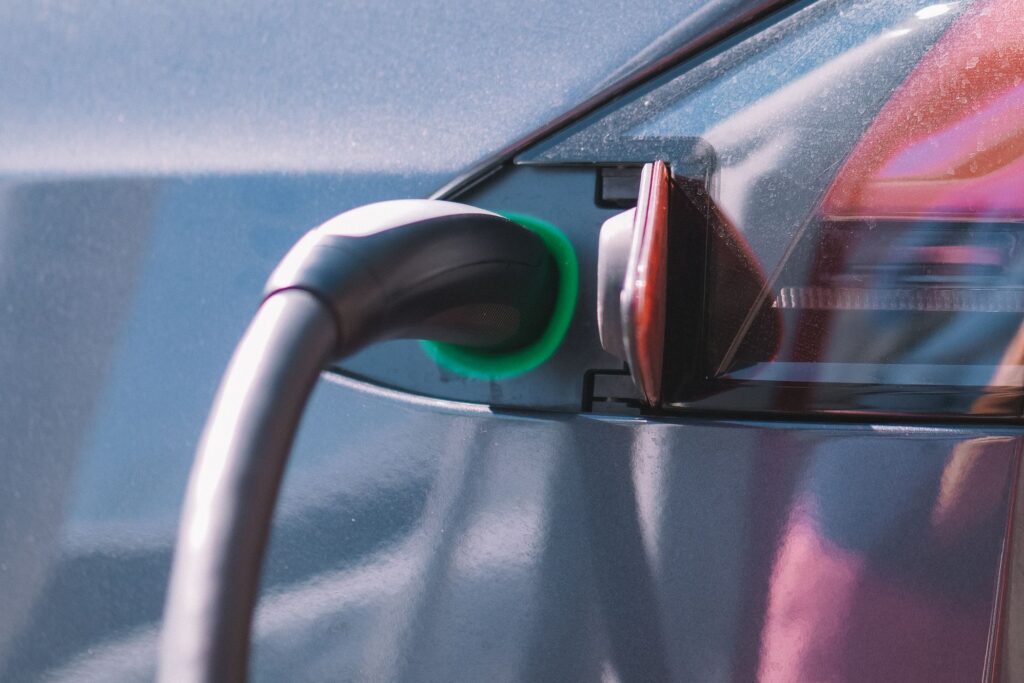
Verification of the charging system —the vehicle port, the cable, behavior during the session— enters the plan because a failure there takes the unit out of service even if everything else works.
Inspection of the regenerative system, where the brake and the electric motor work together, is added as a service in its own right, separate from the conventional brake inspection.
And vehicle software updates, which in many models affect energy management and charging behavior, are coordinated with the official dealer and should be treated as one more scheduled service, not as a one-off event.
Shared components behave differently
Some parts exist in both types of vehicle, but their wear changes enough that intervals inherited from diesel end up wrong.
Brakes last much longer. Regenerative braking handles a large part of the deceleration, so pads and rotors wear much more slowly. The downside is less obvious: reduced use of the mechanical brake encourages rotor corrosion in humid climates, so inspection is still necessary even if replacement is spaced out.
Tires last less. The battery pack adds considerable weight and the torque available from a standstill is high, and both accelerate wear. Rotation and inspection intervals should be shortened compared with an equivalent combustion vehicle.
The suspension works under a heavier permanent load, so shock absorbers and bushings need more frequent inspection.
And coolant does not disappear: the thermal circuit for the battery and electric motor has its own fluid and its own service, with specifications different from those of a combustion engine.
Intervals get longer, but each visit weighs more
An electric vehicle goes into the shop far fewer times a year than an equivalent combustion vehicle, and manufacturers set scheduled services at noticeably longer intervals.
That has a consequence that often comes as a surprise. With fewer visits, each one concentrates more work, requires more specialization and leaves less room for rescheduling. In a diesel, postponing a service by two weeks is almost irrelevant; in an electric vehicle with widely spaced services and a schedule dependent on a dealer, the postponement can turn into months.
Planning therefore becomes more important, not less. The maintenance plan for the electric model is loaded with its own services and tasks, and the calendar of preventive jobs and expirations becomes the tool that keeps a long interval from turning into an oversight. The general criteria for scheduling these cycles are in scheduled preventive maintenance with a calendar.
The battery defines the economic decision
The battery accounts for a very high share of the vehicle’s value, and it is the component that governs the renewal strategy of an electric fleet.
Its capacity degrades with use, and degradation depends on three factors that are under the operation’s control: the depth of charge and discharge cycles, the frequency of fast charging and the temperature at which the pack operates and charges. A reasonable charging policy —systematically avoiding one hundred percent and zero, limiting fast charging to what is necessary, protecting units from extreme heat— has a measurable effect on service life.
The pack’s state of health is tracked with the information provided by the vehicle itself and the manufacturer, not with the fleet management system. The data exists, but its source is the brand’s official channel, and what falls to the fleet side is recording each inspection and its result in the unit’s history.
Manufacturer warranties cover the pack for long periods, typically several years or a high mileage, with a guaranteed minimum capacity threshold. Knowing that threshold and the exact expiration for each unit matters much more in an electric fleet than in a diesel one, because it marks the moment when the economic risk becomes yours. It is information worth treating as one more expiration and keeping on the calendar with the same seriousness as a vehicle inspection.
The shop network is the real constraint in LATAM
The practical obstacle to the transition is usually not technical but the availability of suppliers.
Working on high-voltage systems requires specific certification, dedicated tools and strict safety protocols. A mechanic with twenty years of experience in diesel is not qualified to work on an electric vehicle’s powertrain without that training, and the legal liability for a poorly done job is considerable.
In much of the region, the independent network has not yet reached that capability, so fleets that add electric vehicles initially depend on the official dealer. That means fewer service points, less room to negotiate rates and more rigid schedules. In geographically dispersed operations, it can mean a unit has to travel a considerable distance for a scheduled service.
This constraint has two implications for decisions made earlier: it determines where the first electric units should be deployed —close to a qualified service point— and practically rules out handling the powertrain in-house in the initial stage, a discussion covered in in-house or external shop.
How the electric model’s plan is structured
From a management standpoint, an electric vehicle is treated as what it is: a different model, with its own plan.
The model is registered with its own parameters and does not inherit those of the combustion equivalent, because practically no interval coincides. On that model the maintenance plan is built with its services and tasks: those kept from the general scheme, such as brakes, tires and suspension, with corrected intervals; and the new ones, such as battery cooling, high voltage and the charging system.
The operational workflow does not change. Failures are recorded as corrective jobs, scheduled services as preventive jobs and inspections and warranties as expirations, with the same partial and total times as the rest of the fleet. That is what later makes it possible to compare the cost of running an electric vehicle against a diesel one with the same yardstick.
Routine inspections deserve a separate mention. A checklist form specific to electric vehicles —condition of the charging cable and port, behavior during the session, no dashboard alerts— makes it possible to detect problems early, and when an answer flags a failure the corresponding corrective job is generated. Since these units go into the shop only a few times a year, periodic inspection covers much of the gap.
In what order to make the transition
The most expensive sequencing mistake is buying first. The units arrive, and only then do you discover that there is nowhere to charge them reliably, that the usual shop cannot work on them and that the maintenance plan loaded is the diesel one with the oil change deleted.
The order that works starts with charging infrastructure, because it takes the longest. Defining where units will charge, with what available power and whether the base’s electrical installation can support it can take months of work and paperwork. It is the critical path of the whole transition.
The second step is deciding who does the maintenance, before choosing the model. Identifying which qualified service points exist in the area where the units will operate can determine which brand to buy, and finding out afterward is a serious problem.
The third is choosing the pilot operation, and it should be the most predictable one you have: limited routes, return to base every night, stable mileage. The demanding operation is electrified later.
The fourth is building the model’s plan and the specific checklist before the unit starts operating, not afterward. A vehicle that runs for three months without a plan loaded creates a gap in the history that can never be recovered.
And the last is measuring with the same yardstick over a full cycle. The pilot’s cost per kilometer and availability compared with equivalent combustion units, over at least a year of operation, is what lets you decide whether the next batch makes sense. Scaling before having that number is a gamble, and the gamble in an electric fleet is expensive because the asset is expensive.
→ Discover the Maintenance module
→ Book a demo
Frequently asked questions
Is it really cheaper to maintain an electric fleet?
In scheduled maintenance, yes, and the reason is concrete: entire services associated with the combustion engine disappear and intervals get longer. But the savings are partly offset by tires, which wear faster because of the weight, and by higher hourly rates while you depend on the official dealer. An honest analysis also has to consider the eventual replacement of the battery pack, which happens beyond the horizon of the first years but weighs heavily when it comes.
Can I reuse the maintenance plan of the equivalent diesel?
It is not advisable. Intervals change in almost every area, including components that exist in both: brakes get longer intervals, tires shorter ones, suspension is inspected more often. Starting from the diesel plan and editing it usually leaves in services that do not apply and leaves out the new ones, which are precisely the critical ones. It is faster and safer to build the electric model’s plan from scratch based on the manufacturer’s documentation.
Can electric vehicle maintenance be handled in-house?
Partially, and not at first. Tasks that do not touch the high-voltage system —tires, suspension, mechanical brakes, routine inspections— can be done internally with the usual staff. Anything involving the powertrain, the battery or high-voltage wiring requires specific certification, dedicated tools and a safety protocol. Most fleets start out depending on the official dealer for that part and consider bringing it in-house only once the electric fleet justifies the training.
How is battery health tracked?
With the information the vehicle and the manufacturer provide through the official channel, which is where that data lives. On the fleet management side, what applies is recording each inspection and its result in the unit’s history, and treating the pack warranty’s expiration as one more expiration on the calendar. That date is relevant because it marks the moment when the economic risk of the vehicle’s most expensive component becomes the company’s.
Is a gradual or complete transition better?
Gradual, almost always, and not for financial reasons but for learning. The first batch of units reveals things no prior analysis anticipates: how long a charge really takes in your operation, how range holds up on your routes and in your climate, how available the qualified shop is. Electrifying a limited, predictable segment for a full cycle before deciding on the next batch greatly reduces the cost of those discoveries.
