Maintenance SLA: how to negotiate response times with external shops
A maintenance SLA is negotiated with three things on the table: how much work you are going to send, what share of that work is urgent and what alternative you have if the shop does not respond. If you do not bring that, the conversation turns into a wish list the shop signs with no real intention of meeting.
This article is about the negotiation: which times to ask for, how to argue for them, what to offer in return and how to act when non-compliance becomes systematic. Measuring compliance —how to read the TP and TT of each ticket to know whether the agreement is being met— is covered separately, in the article on how to measure your suppliers’ SLA.
- November 26, 2026
- Actualizado: November 26, 2026
- Leandro Mataloni
What you are really negotiating
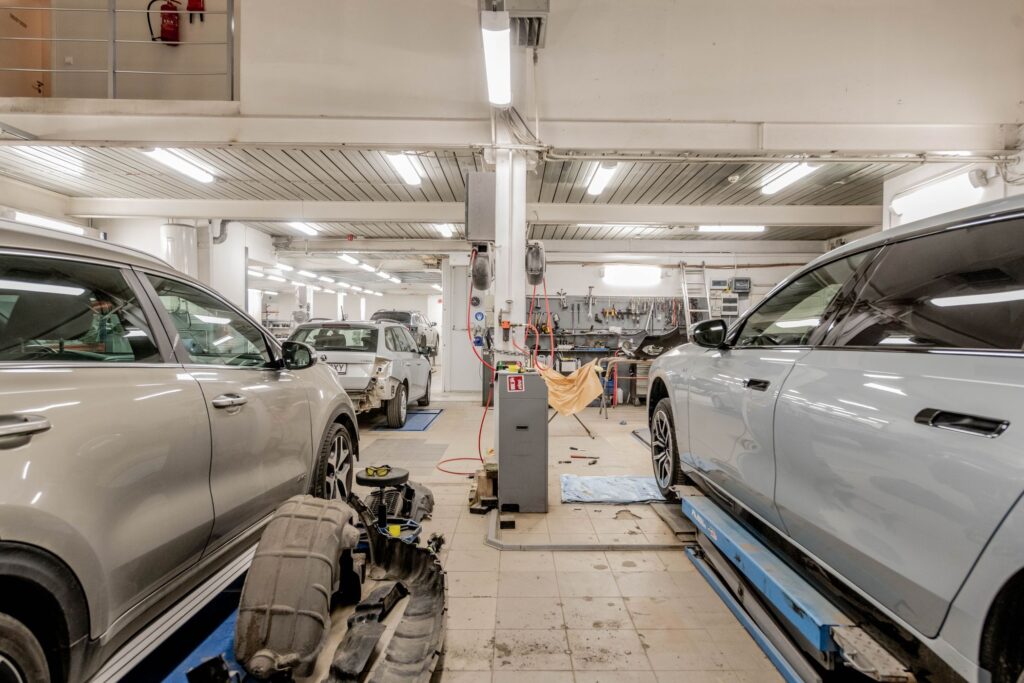
You are not negotiating price. You are negotiating priority: the place your vehicle takes in the shop’s queue when five jobs come in on the same day. A shop that serves twenty customers orders that queue by some criterion, and the SLA is the attempt to have that criterion written down instead of depending on who called loudest that morning.
That changes how you approach the conversation. Asking for “better service” means nothing; asking that a corrective job that takes a vehicle out of service gets a diagnosis within the first hours after check-in does, because it describes verifiable behavior. If you cannot verify it later, do not ask for it.
What you need to know before you sit down
The negotiation is won before the meeting. These four data points are what give you real leverage:
The monthly volume you will send. It is your main bargaining chip. A shop accepts time commitments when the workflow justifies reserving capacity; without predictable volume, what you are asking for is a favor.
The mix of corrective and preventive work. A shop that only receives emergencies from you is always in reactive mode with you. If a good part of what you send is preventive work scheduled weeks in advance, you are handing it plannable work, and that is worth something in the negotiation.
Which vehicles are critical. Not every vehicle costs the same when it is down. If you know which ones block billing when they stop, you can ask for demanding times only for that group instead of asking for them for the whole fleet and getting them for none.
What alternative you have. If this shop is your only option in the area, your negotiating power is low and it is better to acknowledge it than to pretend otherwise. The alternative can be another external supplier or your own in-house shop for simple jobs.
Which times to ask for by type of work
A single threshold for everything is the most common mistake: shop work is not homogeneous and the agreement should not be either. What follows is a starting point; the final number comes from the shop’s real capacity.
For a corrective job that takes the vehicle out of service, what matters is the diagnosis, not the repair. Ask for same-day check-in and a diagnosis with a quote within the first business hours after check-in, because with the diagnosis in hand you can decide whether to wait, reassign the work or replace the vehicle.
For a corrective job that does not stop the operation, the vehicle can keep running while the job is scheduled. It is better to negotiate a window of business days rather than an immediate response: asking for urgency on something that is not urgent wears down your credit for when you really need it.
For a scheduled preventive job, the commitment is not about speed but about the date: that the agreed slot is respected and the vehicle leaves the same day. A preventive job that turns into two days at the shop destroys the logic of scheduling.
For a major job —engine, gearbox, chassis—, the total time depends on parts the shop does not control. Negotiate the quote deadline and immediate notice of any parts delay, not a fixed delivery date nobody can keep.
The trade-off: what you offer in return
An agreement that only places obligations on the shop does not hold up. These are the trade-offs a shop values and that cost you no additional money:
Schedule predictability. Handing over the preventive calendar in advance lets the shop fill idle hours. It is the most valuable thing you can offer and it is almost never offered.
Volume concentration. Splitting the fleet among five shops so as “not to depend on one” usually gives you the worst of both worlds: none receives enough volume to commit. Concentrating on two or three and keeping a fourth as backup works better.
On-time payment. A mid-sized shop works with tight cash flow. Meeting the agreed payment terms, without exceptions, weighs more in the relationship than any clause in the contract.
Documented check-ins. A vehicle that arrives with the fault described, the current mileage and its history available saves the shop a blind diagnosis, and that shortens times for both sides.
What you do when the shop does not deliver
The consequence has to be proportional and, above all, enforceable. A strong penalty clause you are never going to enforce is worse than having no clause, because it establishes that the agreement is just talk.
The first step is conversational and works better than people assume: bring to the monthly meeting the specific tickets that exceeded the agreed time, with dates. Most non-compliance is a process issue, not bad faith, and it gets corrected when someone puts it on the table with evidence.
The second step is volume. Reducing the amount of work sent for a period, explaining why, is the most effective consequence and the one that does not break the relationship. It is also the only one the shop really feels.
The third is a discount on the affected invoices, and it only makes sense if the criterion was written down in advance and you are willing to discuss it invoice by invoice. The fourth, exiting the agreement, is reserved for sustained non-compliance after an improvement plan with a deadline.
None of this happens on its own. Someone on your team has to review compliance on a fixed schedule and decide. If that review is not on anyone’s agenda, the SLA degrades within six months.
Where to start
The order matters more than the content of the agreement. People almost always start by negotiating and only afterward look at what can be measured, when it should be the other way around.
First, get your own records in order. For one or two months, make sure every job sent out is logged as a ticket, with its type and its times. In VEC Fleet, that is the TP and TT of each ticket in the ticketing system. Without that prior record you have nothing to negotiate with or to make claims with later.
Second, measure without an agreement. With two months of tickets you know how long each shop takes today. That number is your baseline and also your argument: asking for an improvement on your own data is very different from asking for an ideal taken from a manual.
Third, define criticality groups. Separate the vehicles whose downtime costs money from those that can wait. Without that separation you will negotiate the same threshold for everything and get the loosest one.
Fourth, negotiate one shop at a time and start with the one with the highest volume. What that shop pushes back on will help you adjust the proposal for the others.
Fifth, schedule the review before signing. If the agreement has no recurring meeting attached and no named owner, do not sign it yet: that meeting is the agreement; the document is just the summary.
In VEC Fleet, shops are registered in the Suppliers and Shops module, and each job is linked to a ticket with its type and its partial and total times. That is what lets you walk into the meeting with the history in hand.
→ Discover the Maintenance module
→ Book a demo
Frequently asked questions
Will a small shop accept a formal time agreement?
Often yes, and sometimes more willingly than a large one, because predictable volume solves a real occupancy problem for it. What a small shop will not accept are deadlines it cannot sustain with its staff. If you adjust the thresholds to its real capacity instead of imposing them, the agreement tends to be met better than one with a large network where your fleet is marginal.
Should I sign a contract or is a written agreement enough?
For most fleets, a written agreement signed by both parties, with times by type of work and the review frequency, is enough and can be negotiated in weeks rather than months. A formal contract is justified when annual volume is high or when you are going to apply discounts for non-compliance, because then you need legal backing for the criterion.
What do I do if the shop disputes my measured times?
It is the best sign in the meeting: it means they are looking at the data. Review the disputed cases with them ticket by ticket, because there are usually differences in criteria about when the clock starts —at notification, at vehicle check-in, at quote approval?—. Defining that starting point together with the shop resolves most discrepancies and makes the agreement defensible.
Is a time agreement useful if I have my own shop?
Yes, and the exercise is just as useful. In an in-house setup there is no invoice to discount, but there is an expectation of times that the internal team should know and that today is usually implicit. In addition, having your own times measured gives you the benchmark to know whether outsourcing a type of work makes sense for you or not.
How often should the agreed thresholds be reviewed?
A quarterly compliance review and an annual threshold review work well in stable fleets. If something structural changes —you grow in number of vehicles, add new models, move a base—, the review is brought forward. Agreements that are never reviewed end up describing an operation that no longer exists, and the team stops taking them seriously.